52 Motivational Quotes to Start the Day With Courage and Purpose
Published: 8 Nov 2026
Before he planned his work, Benjamin Franklin asked himself a question about the good he might do that day. Marcus Aurelius had a more immediate problem: he wanted to stay in bed. And when Emily Dickinson pictured a dawn whose arrival she couldn’t predict, she imagined herself walking through the house and opening every door. There’s room in a morning for all three impulses: purpose, reluctance, and hope.
Choose the section that fits the day you’re actually facing. If you have a decision to make, try the words on courage. If you’re tired of being told to keep going, start with Christina Rossetti’s traveler, who wants an honest answer about how long the road will be. If someone crossed your mind as soon as you woke up, the last eight quotes are for sharing.
Morning Quotes That Make a New Day Feel Possible
A fresh start sounds grand until the alarm rings. These writers bring it within reach. For one, it begins with a question. For another, it’s the moment you step outside and remember that you get to choose a direction.
What good shall I do this day?
— Benjamin Franklin, The Autobiography of Benjamin Franklin, daily schedule.
Try answering Franklin with a person’s name. “I’ll help Maya prepare for her interview” gives the morning a direction that “get more done” never quite manages.
I am rising to the work of a human being.
— Marcus Aurelius, Meditations, Book V, section 1, translated by George Long.
Marcus writes this while reasoning with himself about getting up. That detail has survived nearly two thousand years of mornings: the person offering the encouragement needs it himself.
Not knowing when the dawn will come
I open every door;
— Emily Dickinson, “Not knowing when the dawn will come,” Poems, Third Series.
She can’t choose the hour of sunrise. She can open the doors. It’s a small, exact picture of what a person can do while waiting for life to change.
Every morning was a cheerful invitation to make my life of equal simplicity, and I may say innocence, with Nature herself.
— Henry David Thoreau, Walden, “Where I Lived, and What I Lived For.”
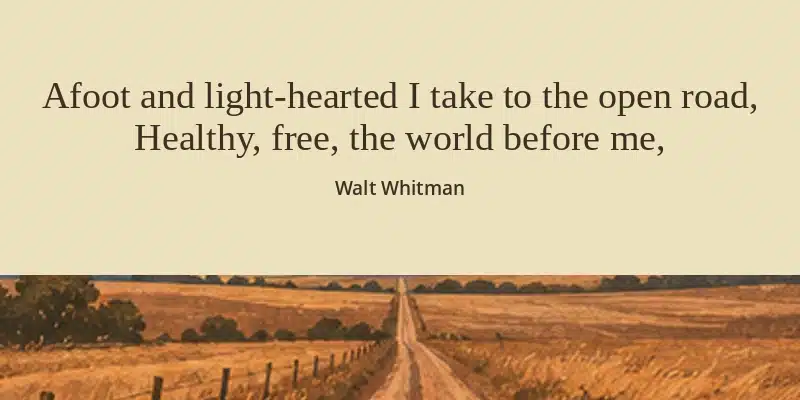
Afoot and light-hearted I take to the open road,
Healthy, free, the world before me,
— Walt Whitman, “Song of the Open Road,” section 1.
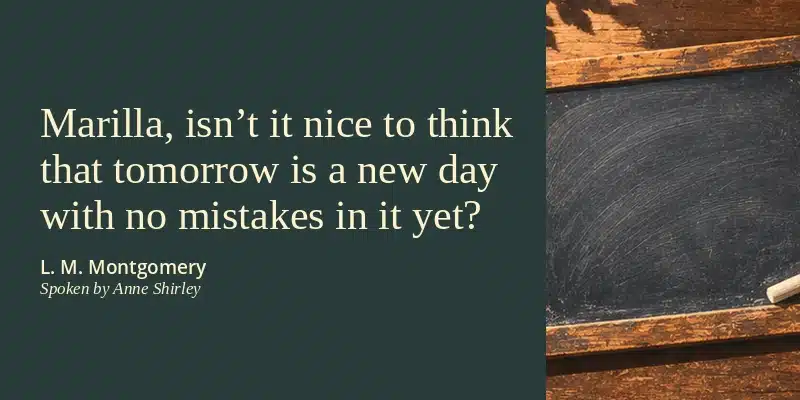
Marilla, isn’t it nice to think that tomorrow is a new day with no mistakes in it yet?
— L. M. Montgomery, Anne of Green Gables, spoken by Anne Shirley.
The word yet makes this worth saving. Anne knows herself too well to promise perfection. She’s delighted to get another try anyway.
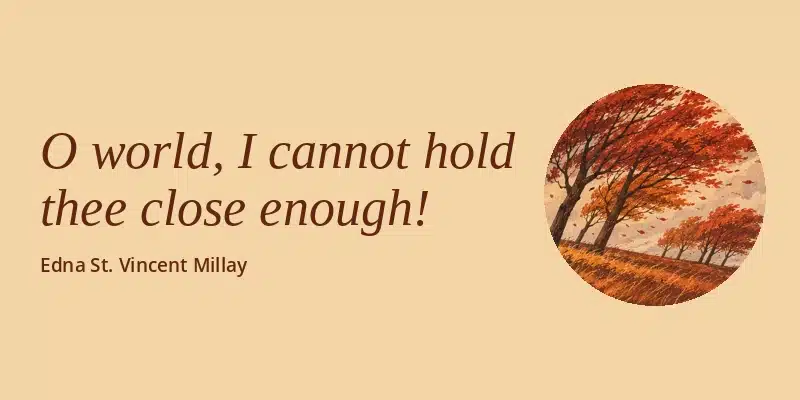
O world, I cannot hold thee close enough!
— Edna St. Vincent Millay, “God’s World.”
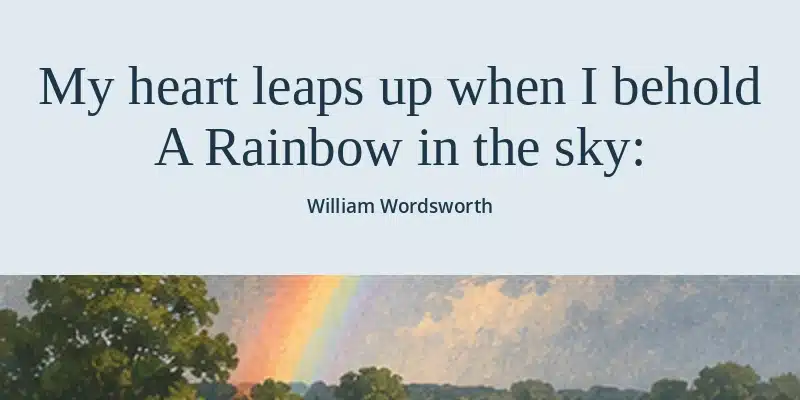
My heart leaps up when I behold
A Rainbow in the sky:
— William Wordsworth, “My heart leaps up,” Poems (1815 edition).
Think of something you loved at seven that can still stop you at thirty or sixty. Wordsworth’s rainbow is an invitation to notice what growing up has allowed you to keep.
Quotes for Work That Means Something
An inbox can keep you busy for eight hours without answering the question of what was worth doing. These passages offer several ways to judge a day’s work: whom it served, what you attempted, and whether you can put your tools down in peace.
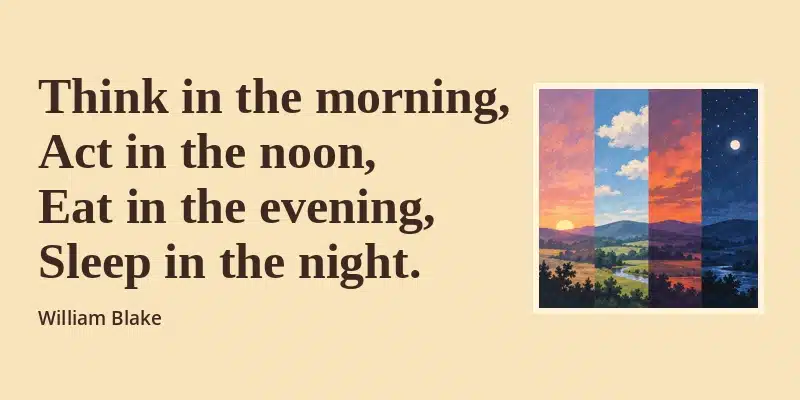
Think in the morning, Act in the noon, Eat in the evening, Sleep in the night.
— William Blake, “Proverbs of Hell,” The Marriage of Heaven and Hell.
What’s easy to miss is that Blake gives eating and sleeping as secure a place in the day as thinking and acting. The proverb has an ending. Work can have one, too.
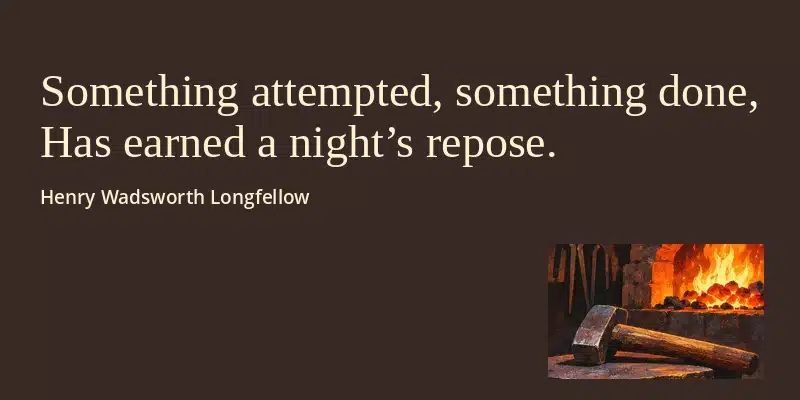
Something attempted, something done,
Has earned a night’s repose.
— Henry Wadsworth Longfellow, “The Village Blacksmith.”
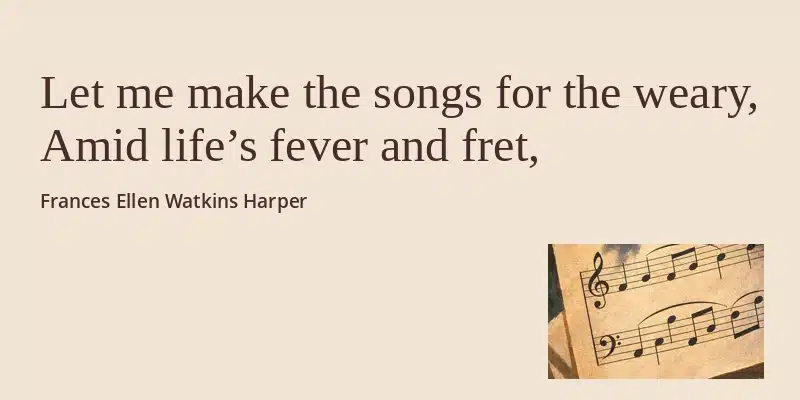
Let me make the songs for the weary,
Amid life’s fever and fret,
— Frances Ellen Watkins Harper, “Songs for the People.”
Before Harper decides what to make, she names the people she wants it to reach. It’s a good question to ask before opening a blank document: Who will be glad this exists?
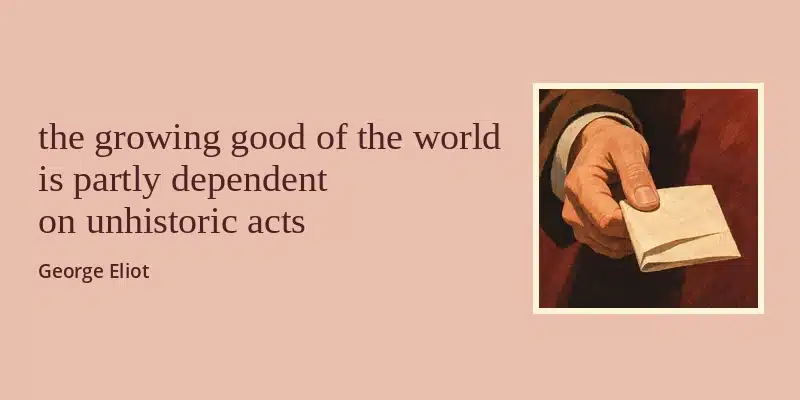
the growing good of the world is partly dependent on unhistoric acts
— George Eliot, Middlemarch, Finale, excerpt.
Teaching a new colleague patiently is an “unhistoric” act. So is showing up for someone who has stopped expecting company. Eliot gives those deeds a place in the account of how the world gets better.
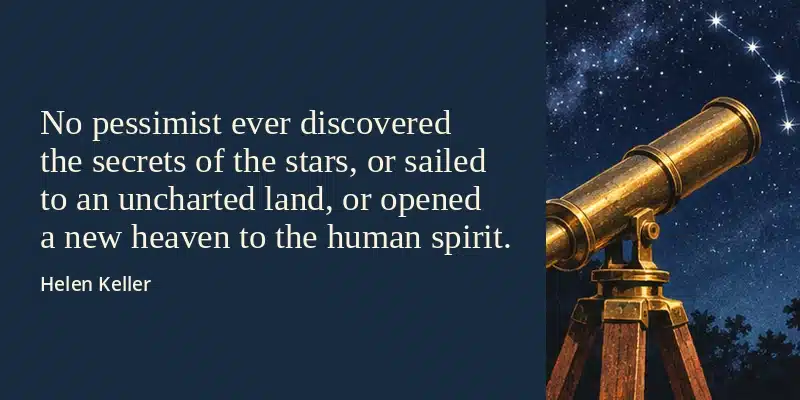
No pessimist ever discovered the secrets of the stars, or sailed to an uncharted land, or opened a new heaven to the human spirit.
— Helen Keller, Optimism, Part III, “The Practice of Optimism.”
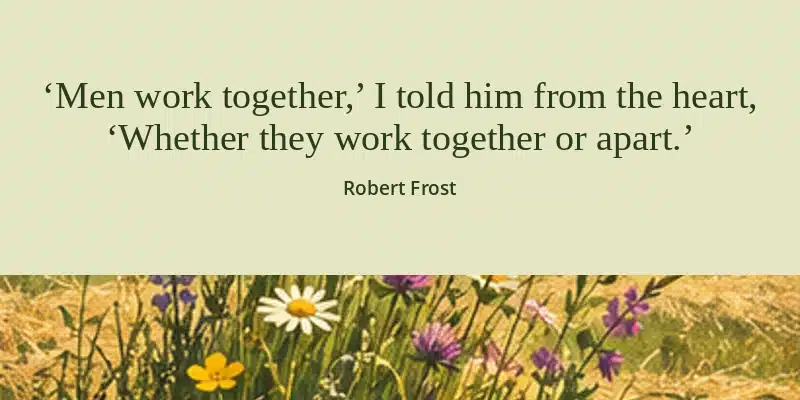
‘Men work together,’ I told him from the heart,
‘Whether they work together or apart.’
— Robert Frost, “The Tuft of Flowers.”
One worker leaves flowers standing. Another arrives later and sees them. They never have to meet for the first man’s care to reach the second. It’s a fine quote for anyone whose work is usually noticed only after they’ve gone home.
Act,—act in the living Present!
— Henry Wadsworth Longfellow, “A Psalm of Life.”
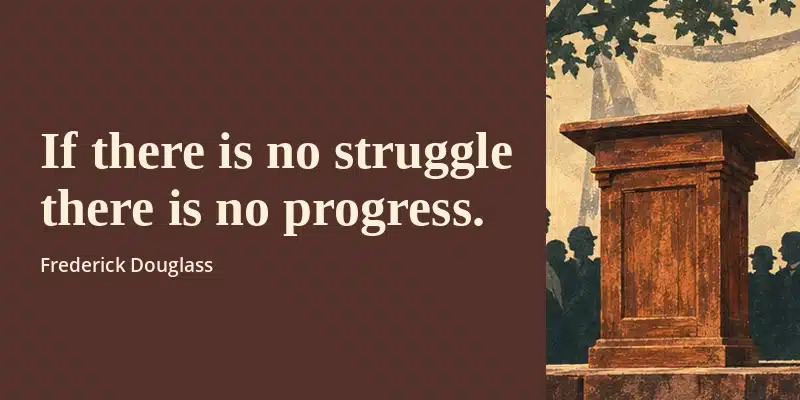
If there is no struggle there is no progress.
— Frederick Douglass, West India Emancipation speech, Canandaigua, New York, 1857.
Douglass spoke these words about the struggle against slavery. Their force comes from that history. Read them when a worthwhile change is meeting resistance, and remember the scale of the struggle he was describing.
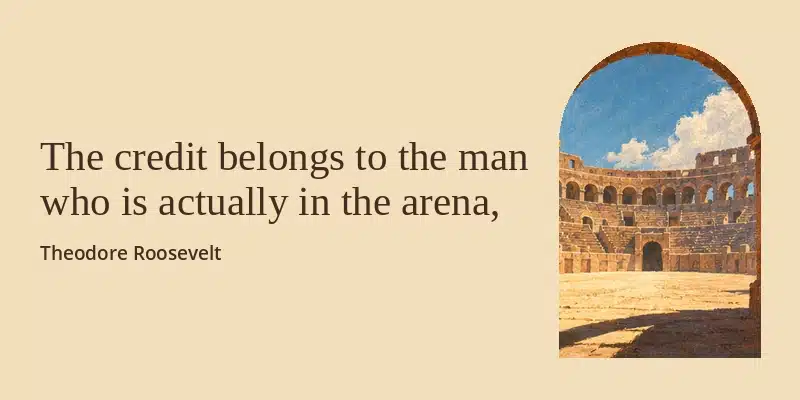
The credit belongs to the man who is actually in the arena,
— Theodore Roosevelt, “Citizenship in a Republic,” excerpt from the passage known as “The Man in the Arena.”
A good line to read before submitting work that someone else will judge. Making the attempt asks something of you that watching from the stands never will.
Quotes for the Morning You Need Courage
Sometimes the hardest part of a choice is the five minutes before you make it. These lines belong beside the application you’ve been afraid to send, the conversation you’ve put off, or the work you’re beginning later in life than you once imagined.
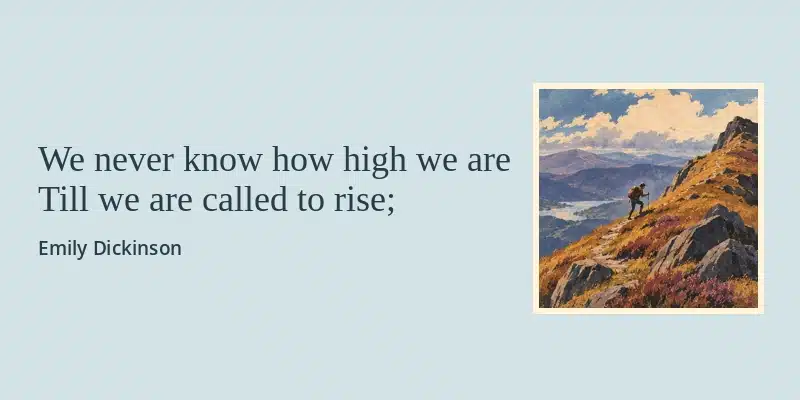
We never know how high we are
Till we are called to rise;
— Emily Dickinson, “We never know how high we are” (1176).
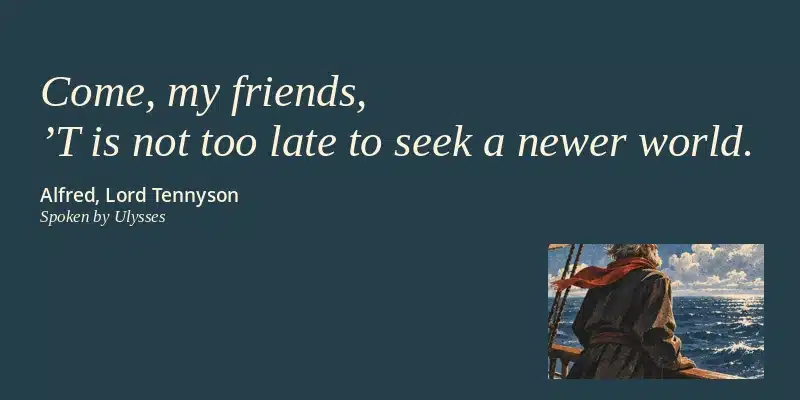
Come, my friends,
‘T is not too late to seek a newer world.
— Alfred, Lord Tennyson, “Ulysses,” spoken by Ulysses.
The speaker is an aging voyager addressing his companions. He already knows what a journey can take out of a person. That’s what gives the invitation its courage.
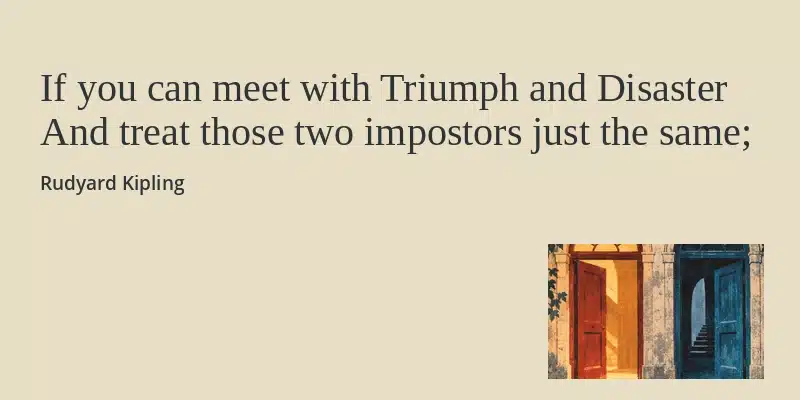
If you can meet with Triumph and Disaster
And treat those two impostors just the same;
— Rudyard Kipling, “If—,” excerpt.
Read this before opening a result you’ve been waiting for. A rejection can make a person feel worthless. Success can make a person feel infallible. Kipling gives you reason to distrust both conclusions.
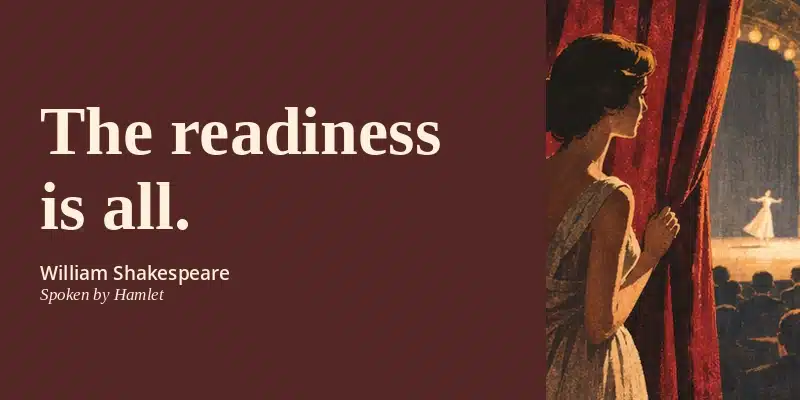
The readiness is all.
— William Shakespeare, Hamlet, Act V, scene 2, spoken by Hamlet.
Hamlet says this in the face of mortality. It’s a bracing line for any moment when preparation has reached its limit and the outcome has passed out of your hands.
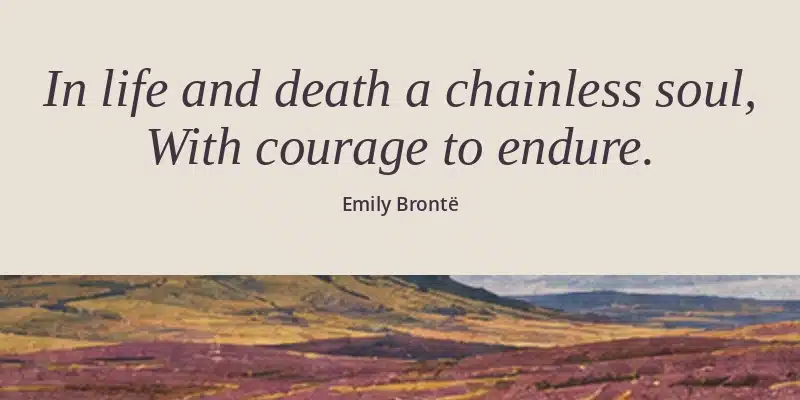
In life and death a chainless soul,
With courage to endure.
— Emily Brontë, “The Old Stoic.”
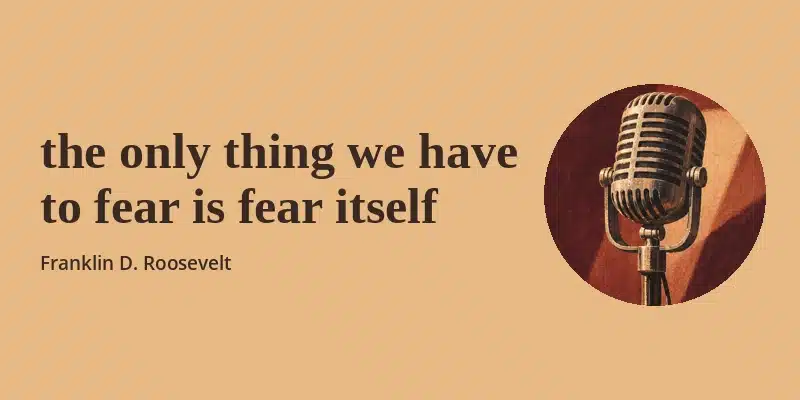
the only thing we have to fear is fear itself
— Franklin D. Roosevelt, First Inaugural Address, 1933, excerpt.
Roosevelt was addressing a country in economic crisis. Part of the danger he identified was the paralysis fear could cause. That’s a useful distinction on a personal scale, too: what is the difficulty, and what has fear stopped you from doing about it?
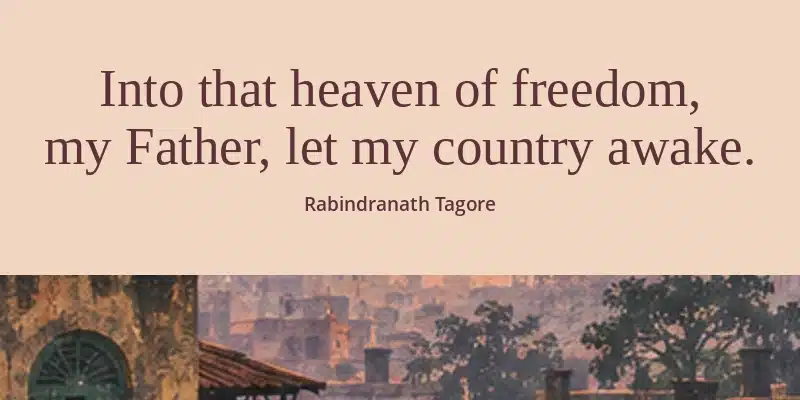
Into that heaven of freedom, my Father, let my country awake.
— Rabindranath Tagore, Gitanjali, poem 35.
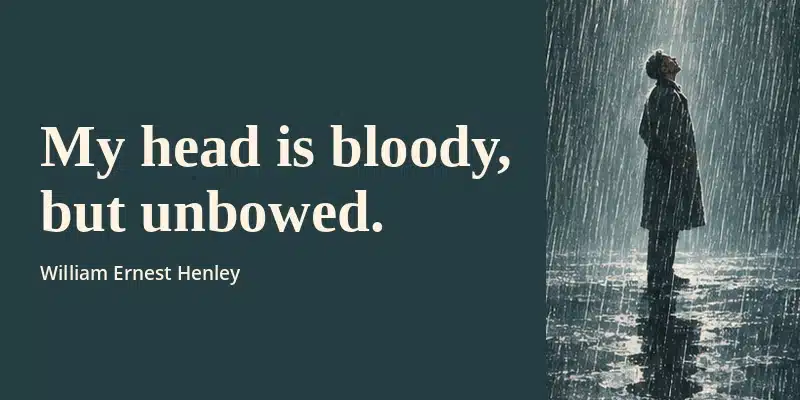
My head is bloody, but unbowed.
— William Ernest Henley, “Invictus.”
Henley leaves the wound in the picture. If you’re looking for a line that acknowledges what something cost you, this one gives the injury and the courage equal room.
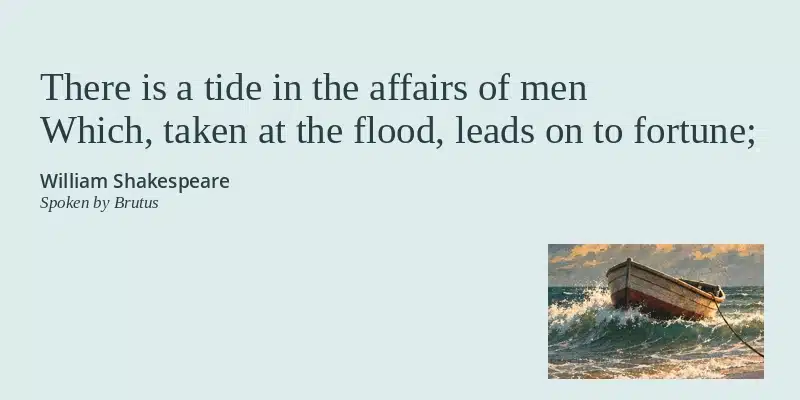
There is a tide in the affairs of men
Which, taken at the flood, leads on to fortune;
— William Shakespeare, Julius Caesar, Act IV, scene 3, spoken by Brutus.
Encouraging Quotes for a Hard Morning
When somebody has had a terrible night, advice can feel like one more demand. A mother’s voice on a staircase, a traveler asking how far there is to go, a poet singing in the dark: these offer company first.
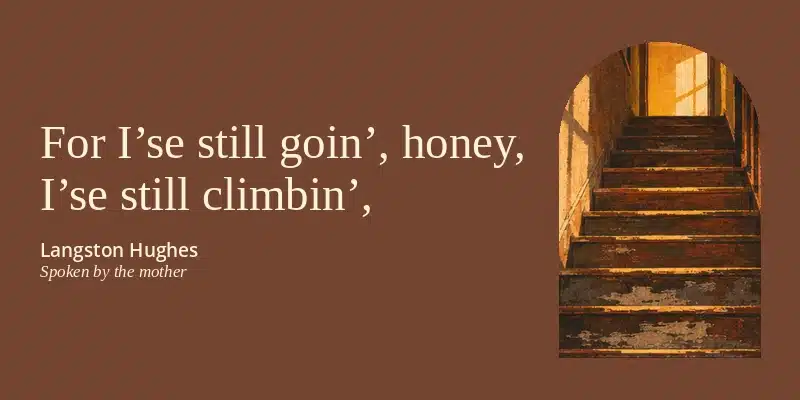
For I’se still goin’, honey,
I’se still climbin’,
— Langston Hughes, “Mother to Son,” spoken by the mother.
The word that stays with you is still. She offers her son the one piece of evidence he can trust: after everything those stairs have put her through, he can hear her on them.
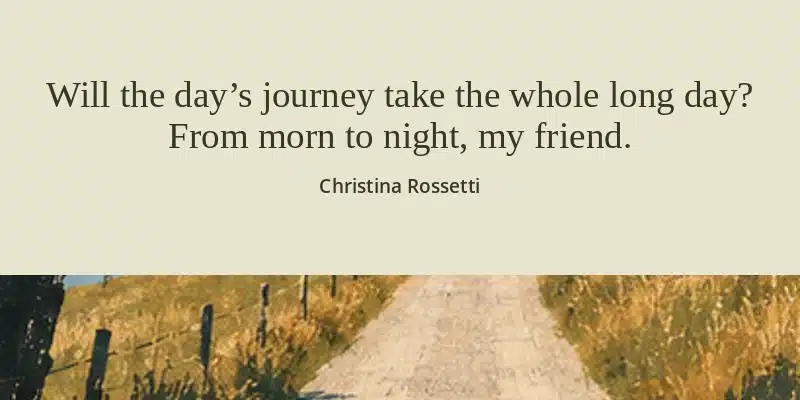
Will the day’s journey take the whole long day?
From morn to night, my friend.
— Christina Rossetti, “Up-Hill.”
The answer is yes. Then come the two words that make the truth easier to hear: my friend.
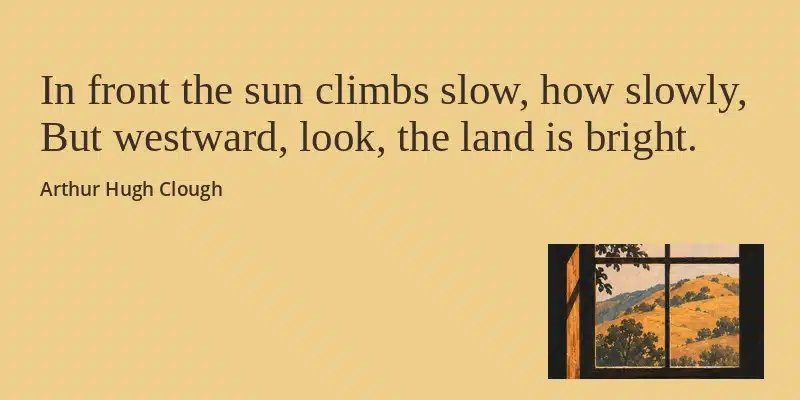
In front the sun climbs slow, how slowly,
But westward, look, the land is bright.
— Arthur Hugh Clough, “Say not the Struggle nought Availeth.”
Anyone who has watched for improvement day by day knows that drawn-out how slowly. Clough suggests a physical movement: turn around. The change you’ve been watching for may be visible somewhere else first.
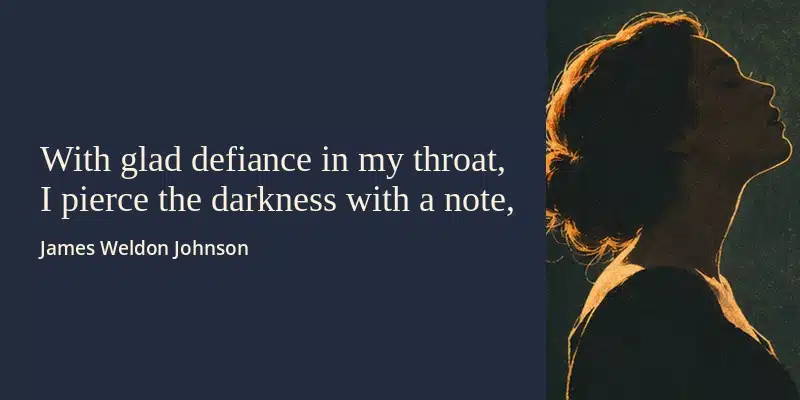
With glad defiance in my throat,
I pierce the darkness with a note,
— James Weldon Johnson, “The Gift to Sing.”
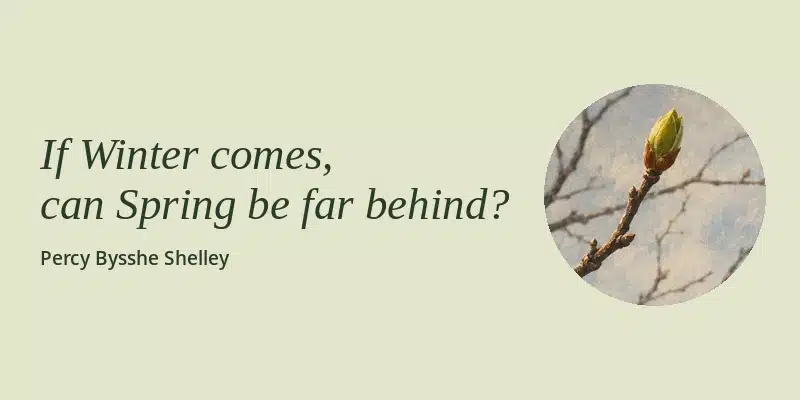
If Winter comes, can Spring be far behind?
— Percy Bysshe Shelley, “Ode to the West Wind,” section V.
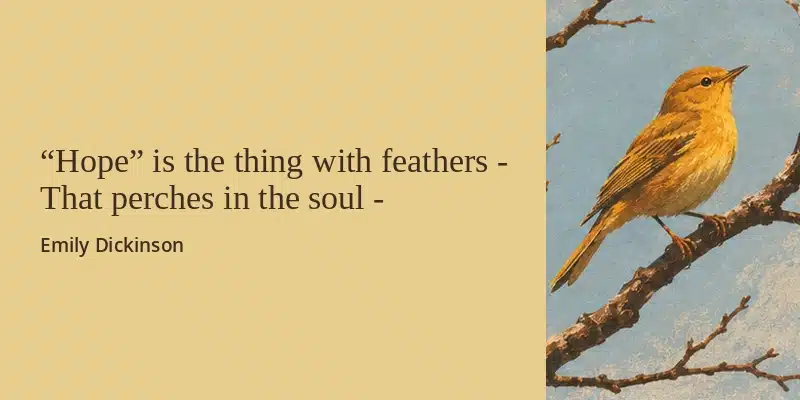
“Hope” is the thing with feathers –
That perches in the soul –
— Emily Dickinson, “‘Hope’ is the thing with feathers” (314).
A bird on a branch is small enough to overlook. Once you’ve heard it sing, though, the whole morning sounds different.
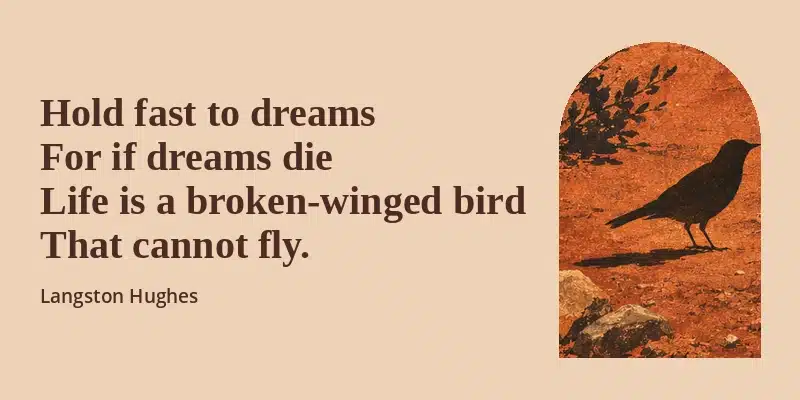
Hold fast to dreams
For if dreams die
Life is a broken-winged bird
That cannot fly.
— Langston Hughes, “Dreams.”
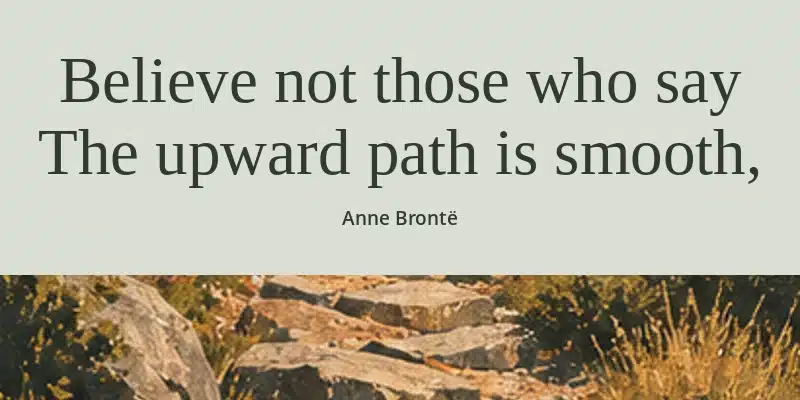
Believe not those who say
The upward path is smooth,
— Anne Brontë, “The Narrow Way.”
Brontë is writing about spiritual perseverance. There’s kindness in her warning: if you know the path is rough, stumbling needn’t convince you that you took the wrong one.
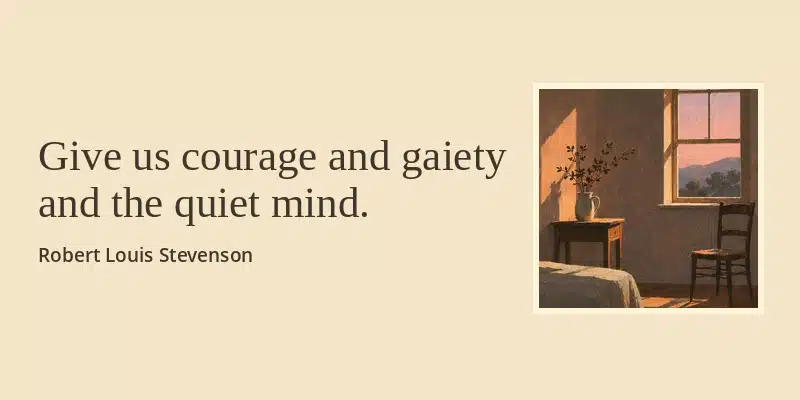
Give us courage and gaiety and the quiet mind.
— Robert Louis Stevenson, a household prayer collected in The Pocket R. L. S.
On a hard day, gaiety is the surprising request. Alongside the strength to endure, Stevenson asks to retain his capacity for joy.
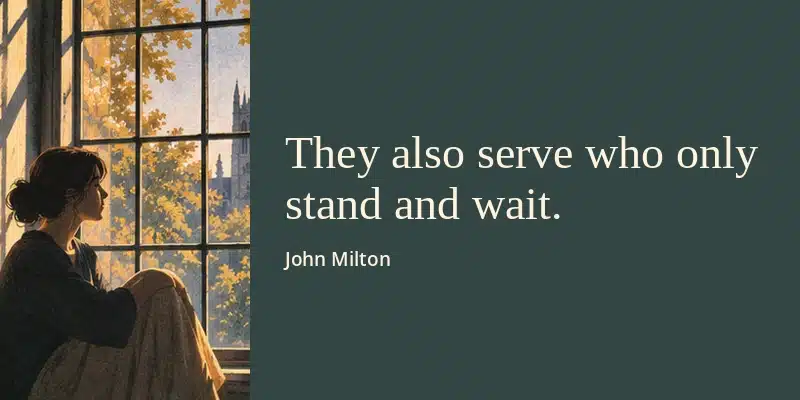
They also serve who only stand and wait.
— John Milton, Sonnet 19, commonly called “On His Blindness.”
Keep this for a morning when illness, caregiving, or circumstances have made your usual work impossible. Milton gives dignity to the person who has to wait.
Quotes About Time and What Deserves It
These are the lines to read before saying yes to something that will take a piece of your life. Some ask how you’ll spend your limited hours. Others ask whether you’ve left yourself a moment to enjoy them.
Your time is limited, so don’t waste it living someone else’s life.
— Steve Jobs, Stanford University commencement address, June 12, 2005.
A useful question before a major decision: If nobody were going to be impressed by this, would I still want it?
Like as the waves make towards the pebbled shore,
So do our minutes hasten to their end;
— William Shakespeare, Sonnet 60.
Spend all you have for loveliness,
Buy it and never count the cost;
— Sara Teasdale, “Barter.”
“Spend” is a striking choice for a poem about beauty. Attention has a cost. Stopping to hear the whole song means giving up the chance to hurry through something else. Teasdale thinks the trade is worth making.
Every cubic inch of space is a miracle,
— Walt Whitman, “Miracles,” excerpt.
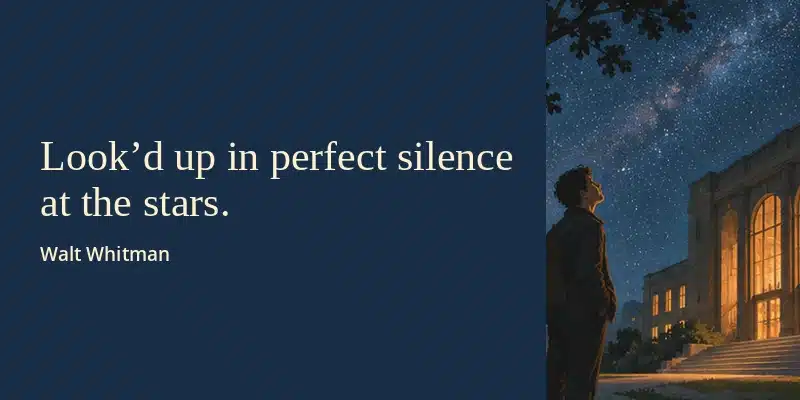
Look’d up in perfect silence at the stars.
— Walt Whitman, “When I Heard the Learn’d Astronomer.”
After listening to the astronomer’s lecture, the speaker steps outside. It’s a line to remember the next time you’ve spent an hour reading about something you could go and see.
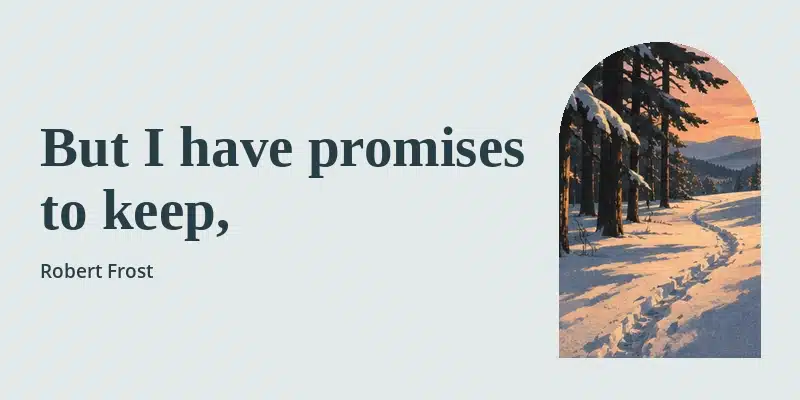
But I have promises to keep,
— Robert Frost, “Stopping by Woods on a Snowy Evening,” excerpt.
The opening But matters. The speaker genuinely wants to stay. Duty carries weight here because the woods have an attraction of their own.
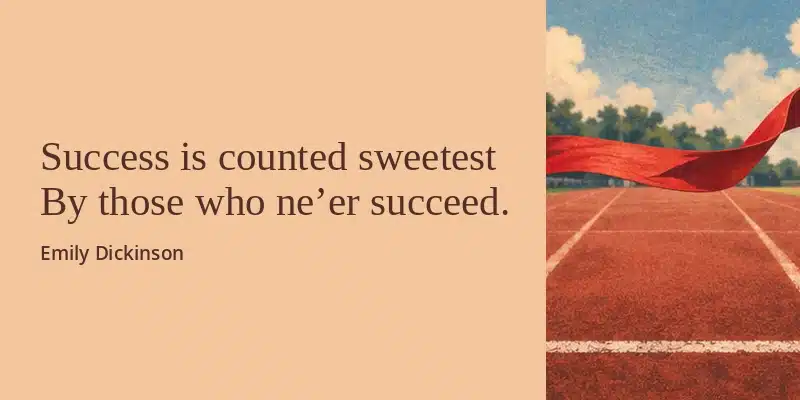
Success is counted sweetest
By those who ne’er succeed.
— Emily Dickinson, “Success is counted sweetest” (112).
For the person still waiting for a first yes, Dickinson gives a little recognition. You may understand the value of the thing you’re pursuing more keenly than someone who has always had it.
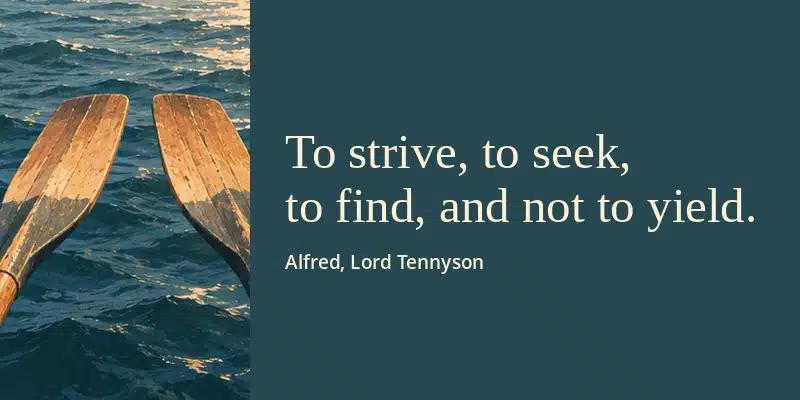
To strive, to seek, to find, and not to yield.
— Alfred, Lord Tennyson, “Ulysses,” closing line.
Morning Quotes to Share With Someone You Love
A famous quote becomes personal when the recipient knows why you picked it. Add one sentence of your own: the kindness you remember, the walk you’d like to take together, or the reason you thought of them today.
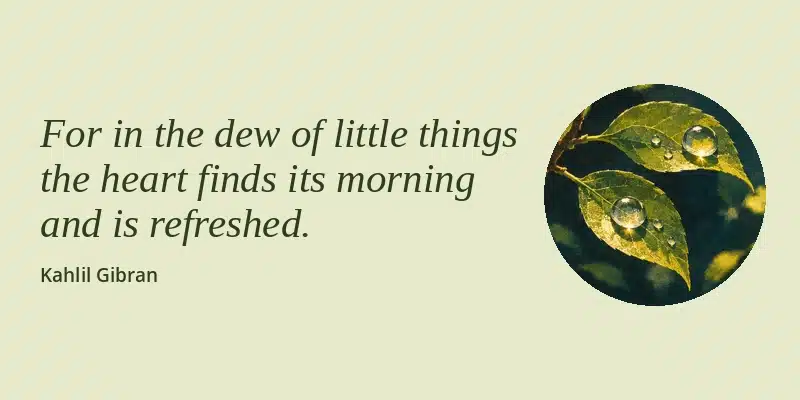
For in the dew of little things the heart finds its morning and is refreshed.
— Kahlil Gibran, The Prophet, “On Friendship.”
Send this to the friend who remembers the appointment you mentioned once and texts afterward to ask how it went. That’s exactly the scale of kindness Gibran has in mind.
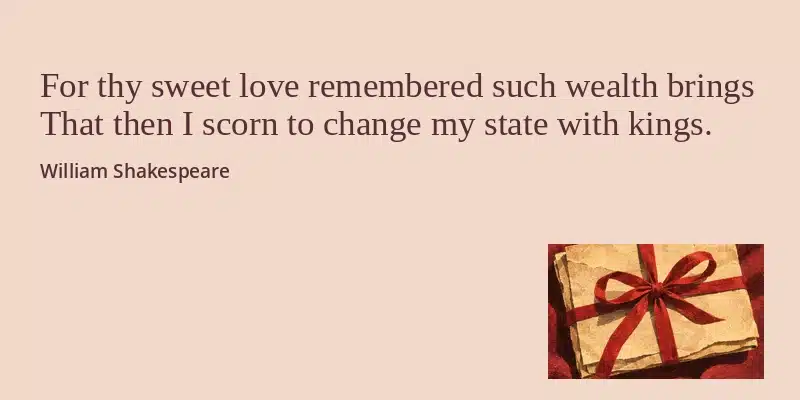
For thy sweet love remembered such wealth brings
That then I scorn to change my state with kings.
— William Shakespeare, Sonnet 29.
Earlier in the sonnet, the speaker envies other people’s prospects and gifts. Remembering one person changes what he thinks his own life is worth. Imagine being told you do that for somebody.
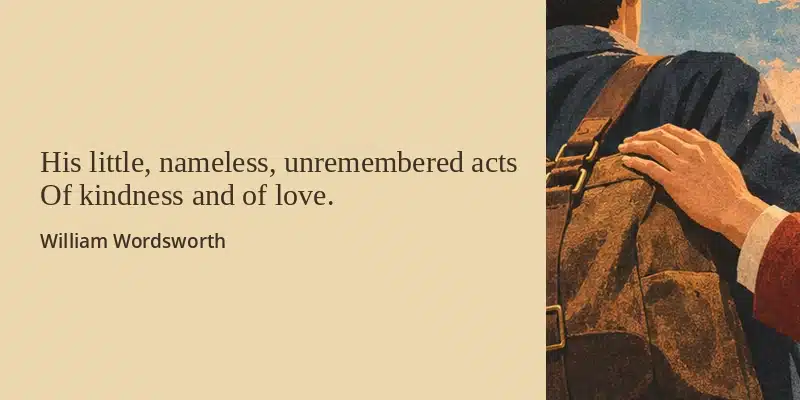
His little, nameless, unremembered acts
Of kindness and of love.
— William Wordsworth, “Lines Composed a Few Miles above Tintern Abbey,” excerpt.
Add the ending only you can supply: You probably don’t remember doing this for me. I do.
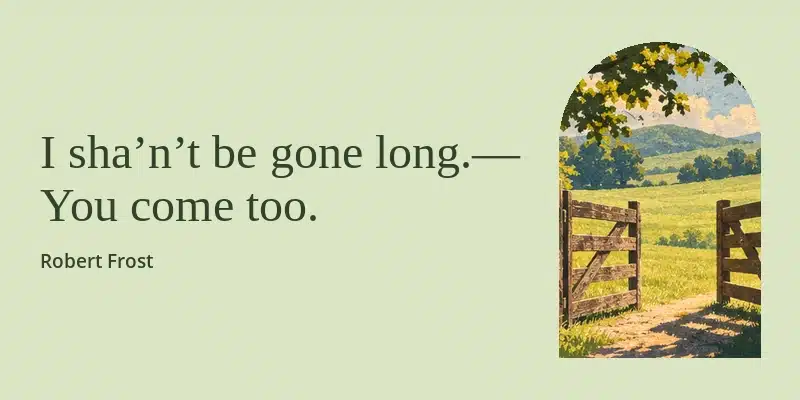
I sha’n’t be gone long.—You come too.
— Robert Frost, “The Pasture.”
Frost’s speaker is heading out to do a chore. The affection lies in wanting company for an ordinary part of the day. Send it with a real invitation and a time.
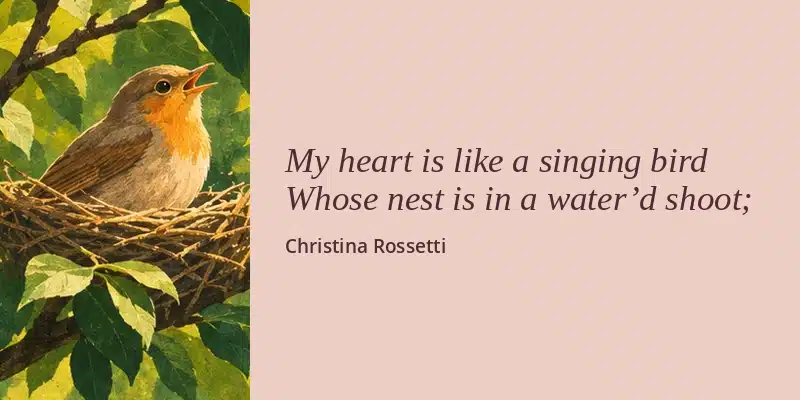
My heart is like a singing bird
Whose nest is in a water’d shoot;
— Christina Rossetti, “A Birthday.”
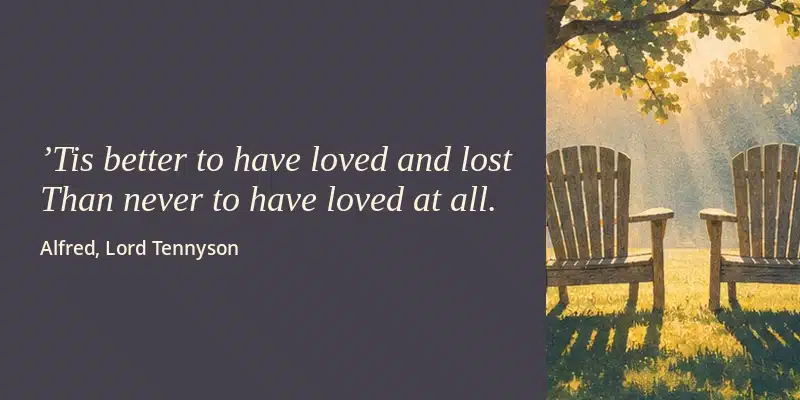
‘Tis better to have loved and lost
Than never to have loved at all.
— Alfred, Lord Tennyson, In Memoriam A. H. H., section 27.
This belongs to a poem of mourning. Share it with someone who already finds comfort in remembering, and let the memory of their person have more space than any advice you might offer.

I lift my lamp beside the golden door!
— Emma Lazarus, “The New Colossus,” spoken by the statue.
Lazarus gives welcome a physical gesture: someone holds up a light so a stranger can find the way in. For a friend starting at a new school or workplace, you can make that gesture literal. Meet them at the door.
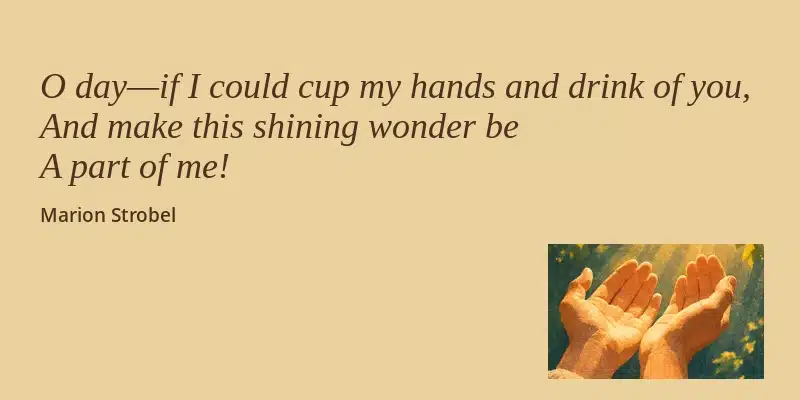
O day—if I could cup my hands and drink of you,
And make this shining wonder be
A part of me!
— Marion Strobel, “Spring Morning.”
Save this one for a morning so lovely that “good morning” feels too small. Strobel finds a way to say what most of us mean when we send someone a photograph of the sky: I wish you could have some of this.
A Question to Carry Into Today
Tomorrow morning, before looking at what everybody else needs from you, borrow Franklin’s question. Answer it with one thing small enough to do and important enough that somebody would notice its absence. Make the call. Sit beside the new person. Send the invitation with an actual time in it. By evening, you’ll have your own answer to give.
And if the person you’re thinking of would rather receive a verse in Urdu, choose one from our collection of good morning poetry in Urdu and Roman Urdu.
Frequently Asked Questions
Benjamin Franklin’s “What good shall I do this day?” works particularly well as an alarm label or the first line of a journal. It’s short enough to remember, and your answer can change each morning.
For a day you already know will be long, try the traveler’s exchange in Christina Rossetti’s “Up-Hill.” The traveler gets an honest answer and the comfort of being called a friend. If you need determination before a challenge, Henley’s “My head is bloody, but unbowed” has a harder edge.
Kahlil Gibran’s line about friendship refreshing the heart is a thoughtful thank-you for someone who shows up in small ways. For an invitation, Frost’s “You come too” is warmer still when you follow it with a plan to meet.
Kipling’s lines about treating triumph and disaster alike are worth reading before an interview or before opening the result. They offer a way to keep your judgment steady whichever answer comes back.





- Be Respectful
- Stay Relevant
- Stay Positive
- True Feedback
- Encourage Discussion
- Avoid Spamming
- No Fake News
- Don't Copy-Paste
- No Personal Attacks
- Be Respectful
- Stay Relevant
- Stay Positive
- True Feedback
- Encourage Discussion
- Avoid Spamming
- No Fake News
- Don't Copy-Paste
- No Personal Attacks
