Quotes for Hard Times: Words of Strength and Hope
Published: 8 Nov 2026
One of the loneliest moments in a hard time comes when somebody asks how you are and you hear yourself say, “Fine.” A few hours later, a line in a book names the very thing you couldn’t explain across the table. Paul Laurence Dunbar knew what a smile could hide. Emily Dickinson found a word as unlikely as formal for the feeling that follows terrible news.
These quotes for hard times are arranged by the moment you might need them. There are words for the early shock, for missing someone long after the house has emptied, for waiting on a decision, and for trying again with less energy than you had the first time. Each comes with its source and a short reflection. Begin wherever life has placed you today.
Table of Contents
When You Can Barely Explain What Hurts
After bad news, ordinary life can become oddly precise. You remember which cup you washed or where you put the keys while the largest thing in your life remains difficult to describe.
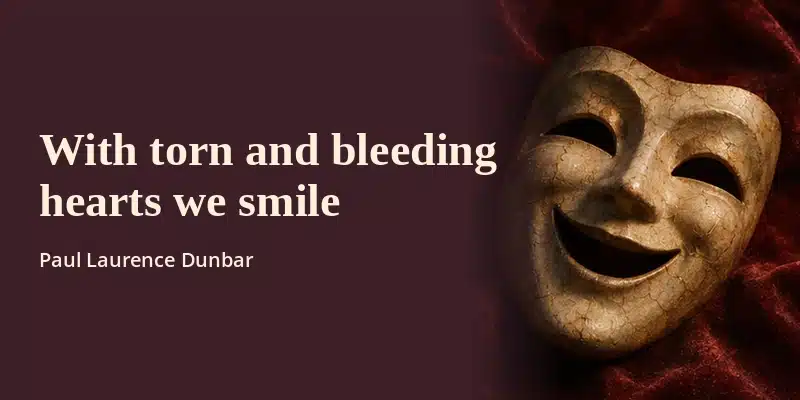
“With torn and bleeding hearts we smile”
— Paul Laurence Dunbar, “We Wear the Mask.”
Dunbar’s we makes the mask a shared burden, worn by people the world expects to smile. If you have ever stayed cheerful to spare yourself another difficult question, you know how much work can go into looking fine.
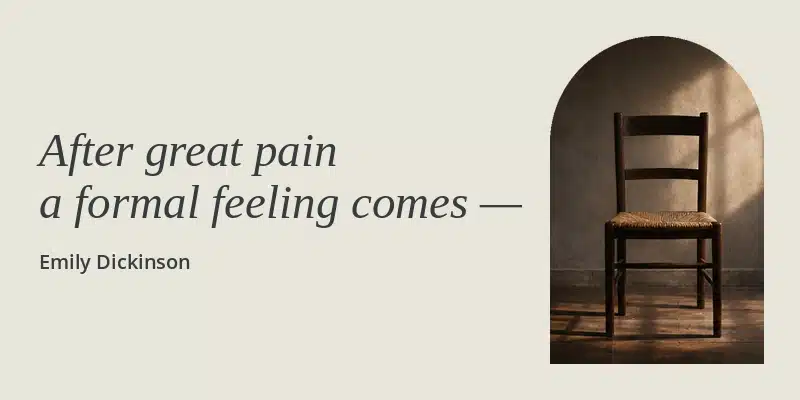
“After great pain a formal feeling comes —”
— Emily Dickinson, “After great pain a formal feeling comes.”
Formal suggests someone standing stiffly, attending to the proper forms. Sometimes you can make tea for everyone in the room hours before you can bear to think about why they came.
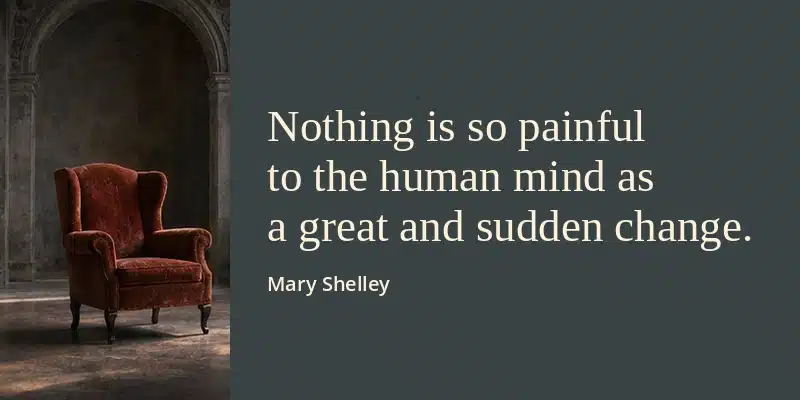
“Nothing is so painful to the human mind as a great and sudden change.”
— Mary Shelley, Frankenstein.
Sudden change takes away a future you had already begun living in your head. Part of the shock is having to imagine next Tuesday all over again.
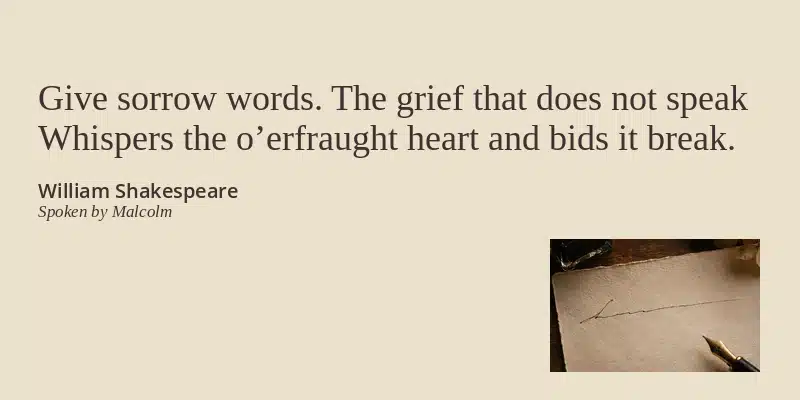
“Give sorrow words. The grief that does not speak
Whispers the o’erfraught heart and bids it break.”
— William Shakespeare, Macbeth, Act IV, scene 3, spoken by Malcolm to Macduff.
Malcolm says this to a man who has just heard devastating news about his family. The first words you give sorrow can be as unfinished as “I don’t know how to say this.”
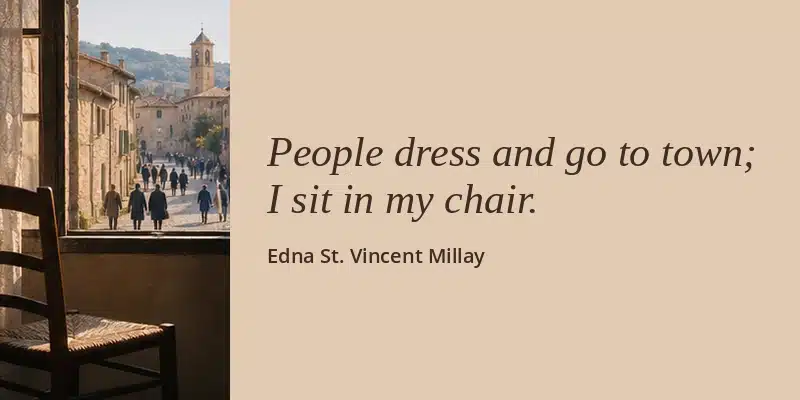
“People dress and go to town;
I sit in my chair.”
— Edna St. Vincent Millay, “Sorrow.”
Two ordinary actions reveal an enormous distance between the speaker and everyone outside. On some days the hardest sight is a bus arriving on time in a world that has stopped for you.
“My own heart let me more have pity on; let
Me live to my sad self hereafter kind,”
— Gerard Manley Hopkins, “My own heart let me more have pity on.”
Hopkins catches himself speaking harshly to someone already in pain: himself. Think of the words you would offer a friend who made your mistake, and notice which of them you have withheld from yourself.
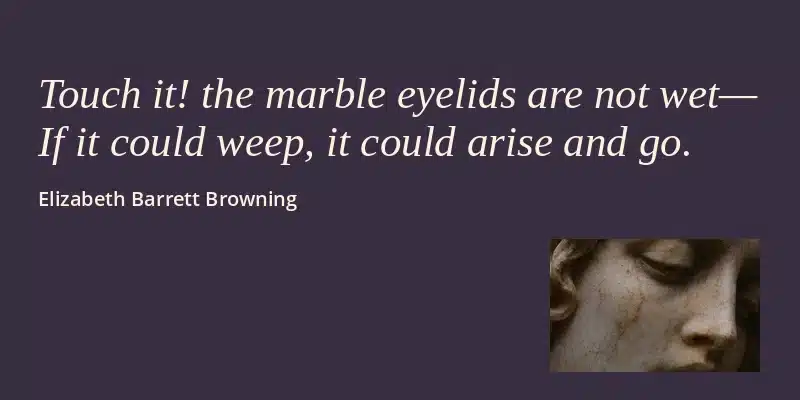
“Touch it! the marble eyelids are not wet—
If it could weep, it could arise and go.”
— Elizabeth Barrett Browning, “Grief.”
Browning pictures anguish as a statue whose stillness an onlooker might take for composure. Tears are a poor measure of something another person carries inside.
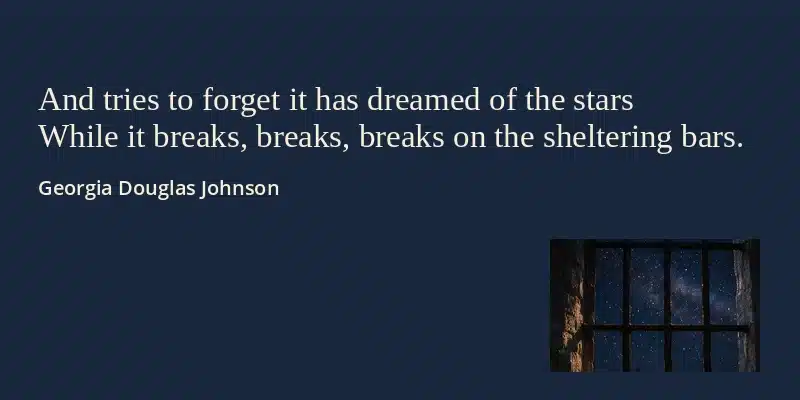
“And tries to forget it has dreamed of the stars
While it breaks, breaks, breaks on the sheltering bars.”
— Georgia Douglas Johnson, “The Heart of a Woman.”
Sheltering is the painful word here: the place that promises safety also confines the speaker. You can be grateful for the roof over your head and still grieve a life you had hoped to live beneath it.
When You’re Grieving Someone or Something You Loved
Absence has a way of hiding in particulars. A voice you would recognize through a wall, a chair nobody claims, a number your hand still wants to dial: these are the places where a loss can catch you unaware.
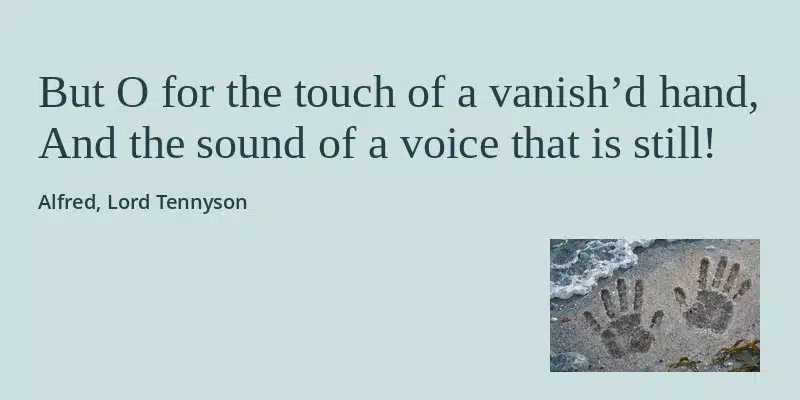
“But O for the touch of a vanish’d hand,
And the sound of a voice that is still!”
— Alfred, Lord Tennyson, “Break, Break, Break.”
Tennyson misses things no substitute could supply: this hand and this voice. Grief can live in something as small as the way one person used to pronounce your name.
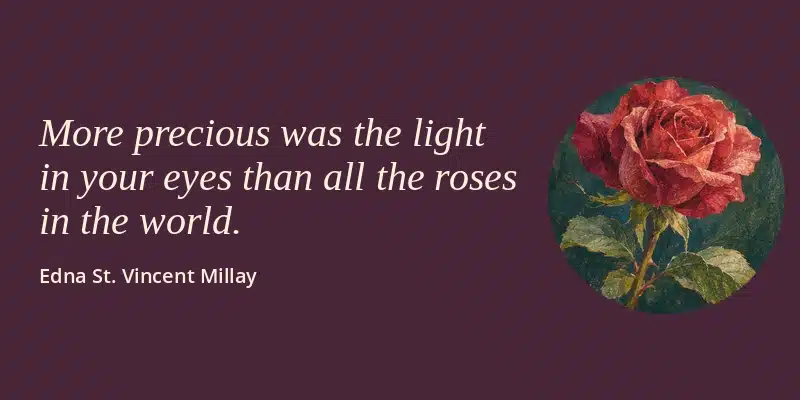
“More precious was the light in your eyes than all the roses in the world.”
— Edna St. Vincent Millay, “Dirge Without Music.”
The speaker sees the beauty of the roses and knows exactly what they cannot give back. Sometimes the truest thing you can say about a person is that nobody else has quite their expression.
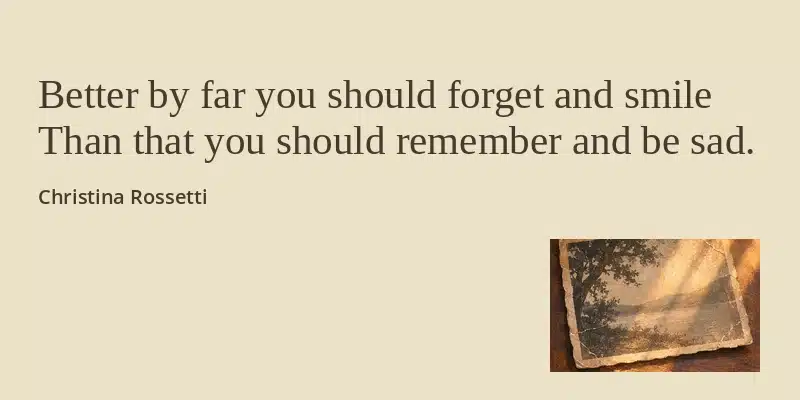
“Better by far you should forget and smile
Than that you should remember and be sad.”
— Christina Rossetti, “Remember.”
Rossetti imagines giving the person who outlives her a final kindness: freedom from the duty of continuous sadness. The first time you laugh again, the love that came before it is still yours.
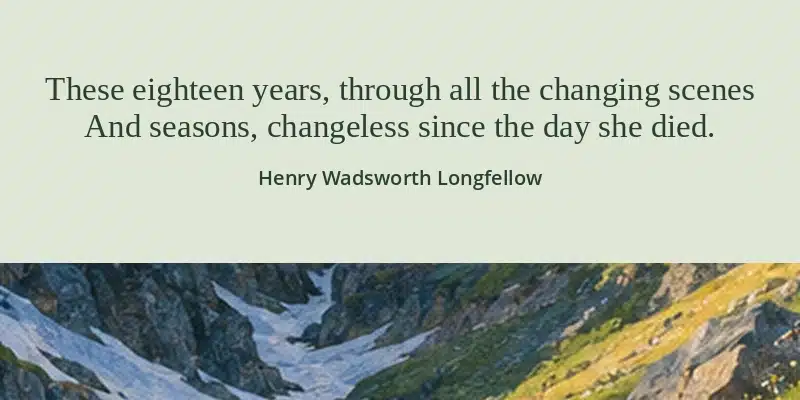
“These eighteen years, through all the changing scenes
And seasons, changeless since the day she died.”
— Henry Wadsworth Longfellow, “The Cross of Snow.”
Most of a mountain can turn green while snow remains in one deep ravine. A person can build a full life around a place that still aches when touched.
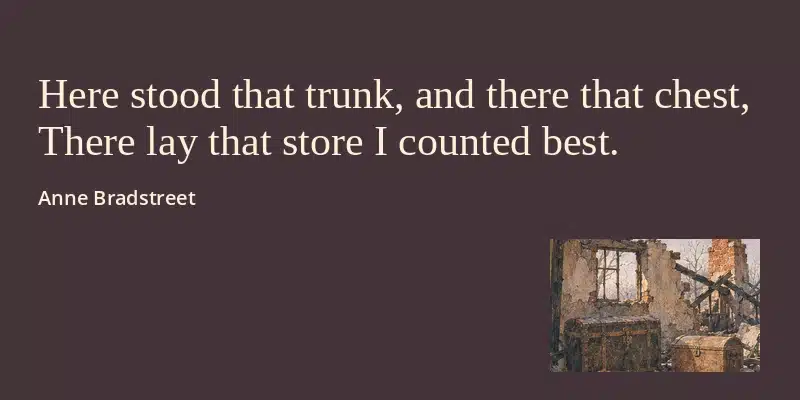
“Here stood that trunk, and there that chest,
There lay that store I counted best.”
— Anne Bradstreet, “Verses upon the Burning of our House, July 10th, 1666.”
Bradstreet could still give directions through a house the fire had erased. A home persists in the body for a while: your hand remembers reaching for a door that is gone.
“Perfect relief is not possible, except with time.”
— Abraham Lincoln, letter to Fanny McCullough after her father’s death, 1862.
Lincoln is writing to a particular grieving daughter, and his sentence asks nothing of her today. Time can be a kindness in a condolence letter; it becomes a burden the moment someone turns it into a deadline.
“I miss him in the weeping of the rain;
I want him at the shrinking of the tide;”
— Edna St. Vincent Millay, “Time does not bring relief,” Sonnet II.
Rain and tide have no personal history until you have loved someone. Afterward, an entire landscape can learn to say their name.
“Where there is sorrow there is holy ground.”
— Oscar Wilde, De Profundis.
Calling the ground holy changes how a visitor ought to enter it. Someone who understands this will draw up a chair beside you before trying to explain what happened.
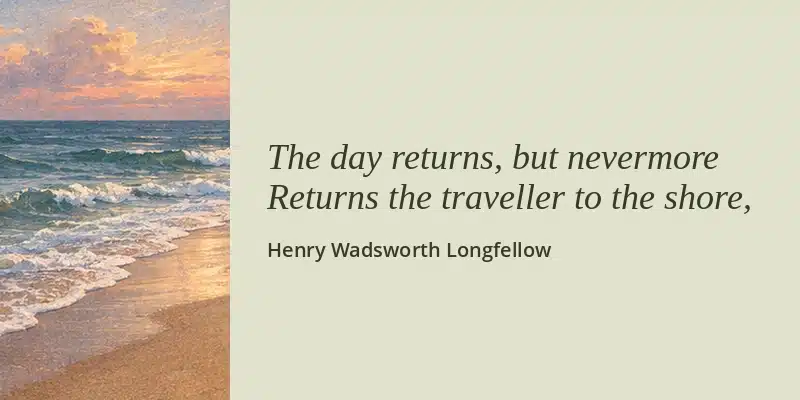
“The day returns, but nevermore
Returns the traveller to the shore,”
— Henry Wadsworth Longfellow, “The Tide Rises, the Tide Falls.”
A new day can feel almost insulting when the person who should be in it is missing. Longfellow lets the sea keep its rhythm while the reader registers the one absence that changes the whole shore.
When the Future Is Out of Your Hands
Waiting for a result or another person’s decision creates a peculiar exhaustion. You can spend a whole afternoon imagining outcomes and have nothing tangible to show for the effort. These writers ask what remains yours during the wait.
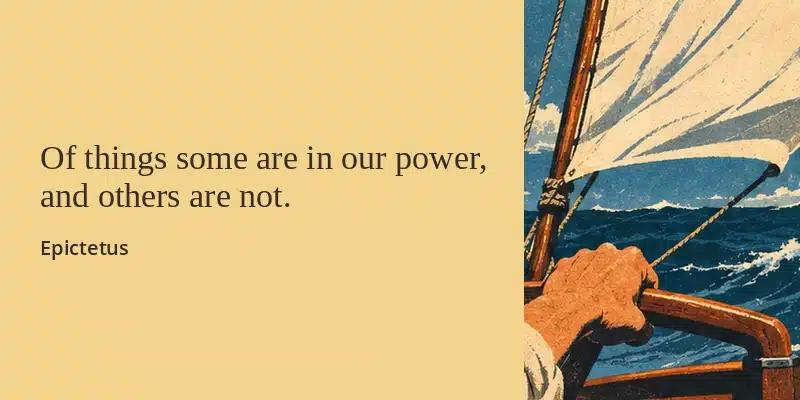
“Of things some are in our power, and others are not.”
— Epictetus, Encheiridion, section I, translated by George Long.
The distinction becomes real after you’ve sent the message and caught yourself composing the other person’s answer. You can stand behind the honesty of your words while leaving their response in their hands.
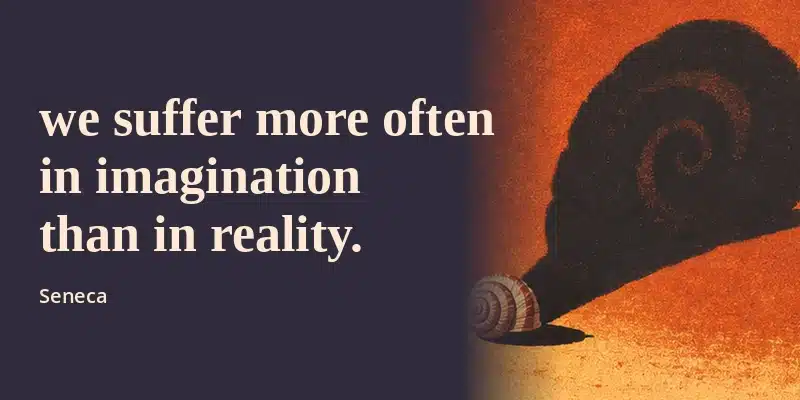
“we suffer more often in imagination than in reality.”
— Seneca, Moral Letters to Lucilius, Letter 13, “On Groundless Fears,” excerpt.
The feeling of fear is real even when the event it describes has yet to happen. Ask which part of today’s burden came in this morning’s news and which part arrived in the story you told afterward.
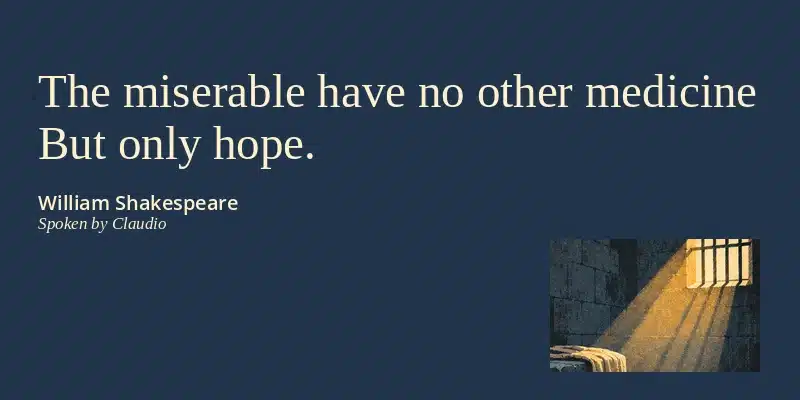
“The miserable have no other medicine
But only hope.”
— William Shakespeare, Measure for Measure, Act III, scene 1, spoken by Claudio.
Claudio speaks under a death sentence, when the space between a possibility and a certainty means everything. Some days the most hopeful thing you can truthfully say is “I don’t know yet.”
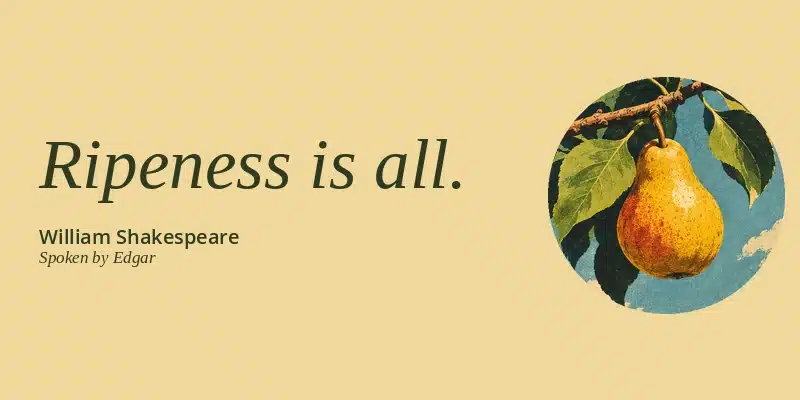
“Ripeness is all.”
— William Shakespeare, King Lear, Act V, scene 2, spoken by Edgar.
Edgar speaks to his father about the human limits around arriving in the world and leaving it. Ripeness is a merciful image for readiness: even something living and healthy takes time to become ready.
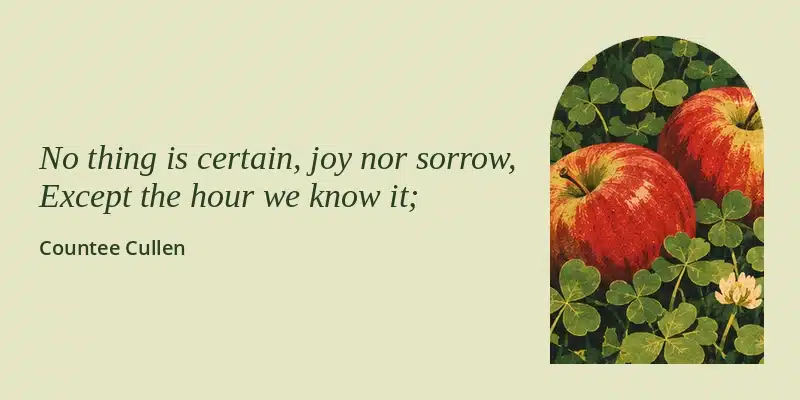
“No thing is certain, joy nor sorrow,
Except the hour we know it;”
— Countee Cullen, “To One Who Said Me Nay.”
Uncertainty works in both directions; the future can disturb a sorrow you expect to last just as easily as a joy. The hour you have with another person is worth inhabiting before you ask how long it will last.
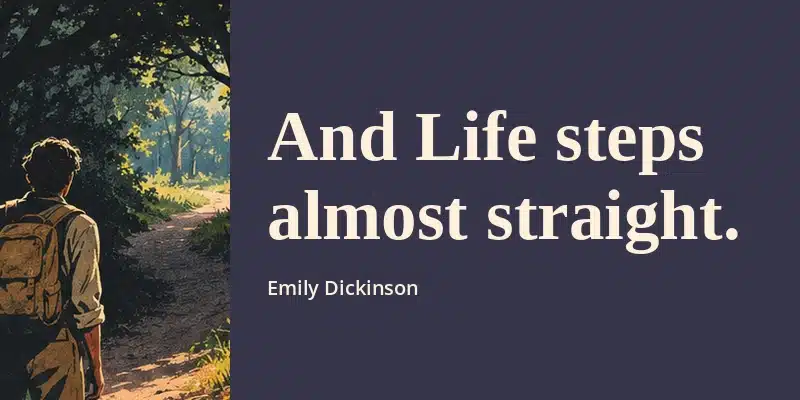
“And Life steps almost straight.”
— Emily Dickinson, “We Grow Accustomed to the Dark,” closing line.
The generous word is almost. You can go back to work, need to leave early on Friday, and still be genuinely finding your way.
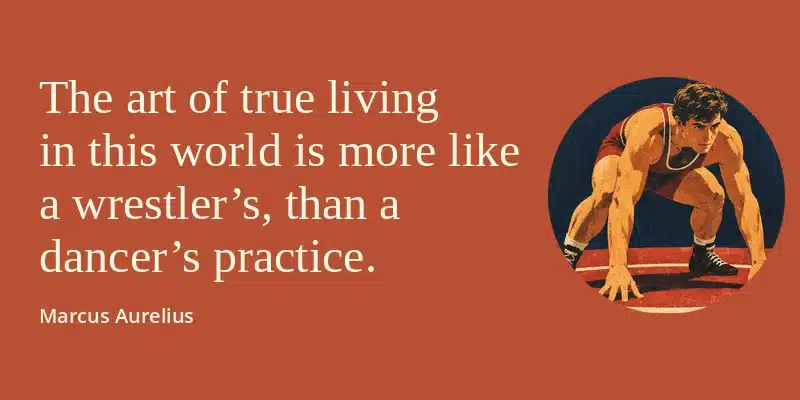
“The art of true living in this world is more like a wrestler’s, than a dancer’s practice.”
— Marcus Aurelius, Meditations, Book VII, section 61.
A wrestler can prepare for years and still have to discover the next move in contact with another person. When a careful plan fails, the ability to shift your weight is a skill you brought with you.
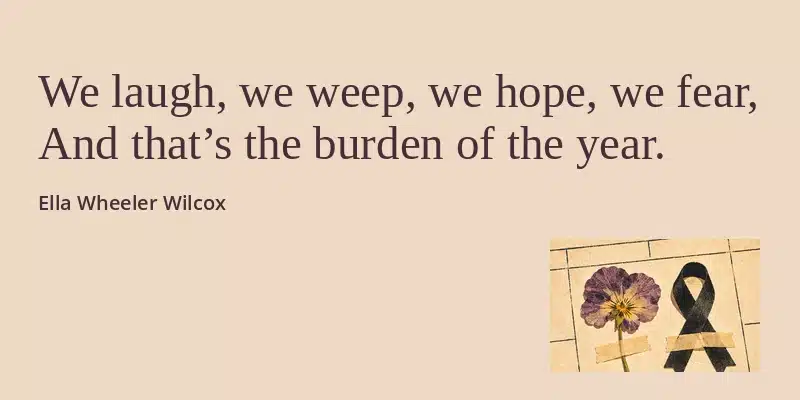
“We laugh, we weep, we hope, we fear,
And that’s the burden of the year.”
— Ella Wheeler Wilcox, “The Year.”
People ask whether it has been a good year or a bad one, as though you owe them a single answer. A year can hold a funeral, a birth, and a lovely afternoon, and each deserves its full weight.
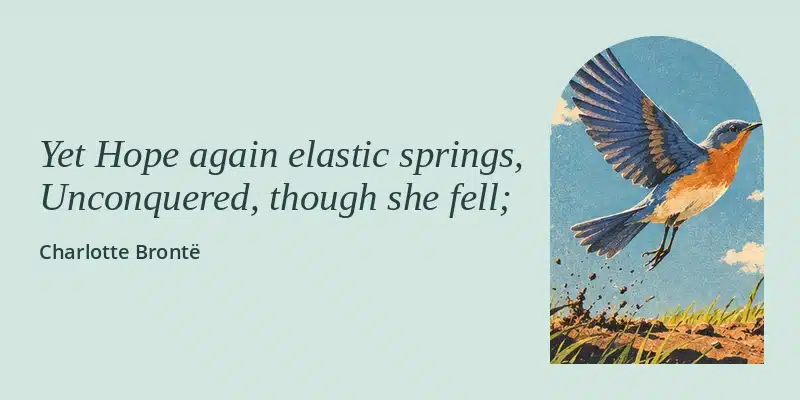
“Yet Hope again elastic springs,
Unconquered, though she fell;”
— Charlotte Brontë, “Life.”
Brontë allows hope the indignity of hitting the ground. Losing heart on Thursday tells you very little about what you may find the strength to do on Friday.
When Being Strong Means Standing Your Ground
There are hardships nobody should be expected to endure quietly. These writers speak from encounters with racism, enslavement, exclusion, and injustice. Their circumstances belong to the meaning of their words.
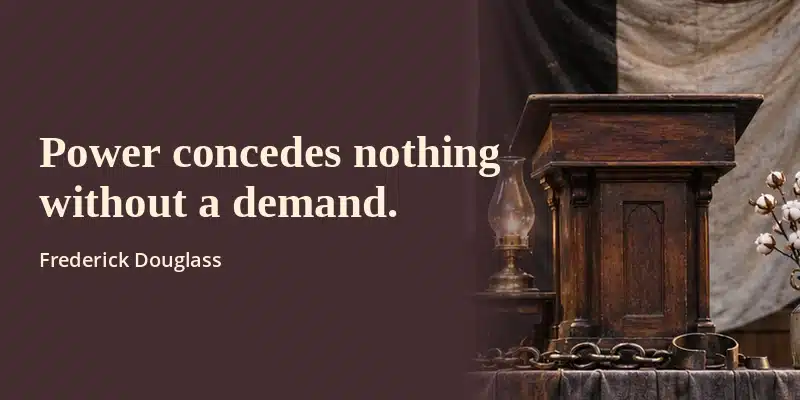
“Power concedes nothing without a demand.”
— Frederick Douglass, West India Emancipation speech, Canandaigua, New York, 1857.
An arrangement can be intolerable to the person beneath it and perfectly comfortable to the person in charge. Naming what must change interrupts the convenient assumption that silence means consent.
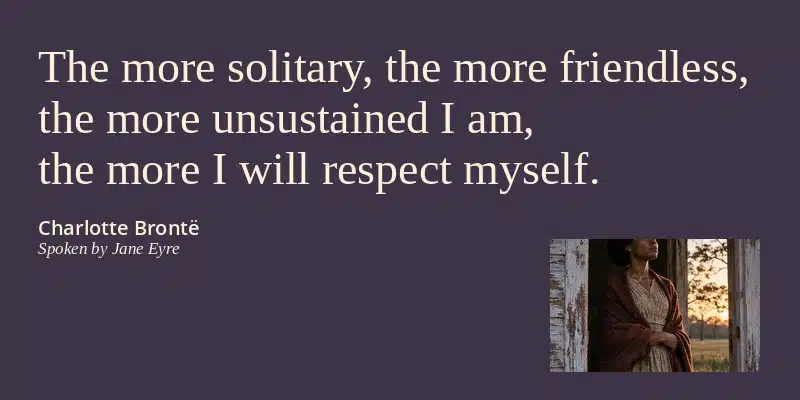
“The more solitary, the more friendless, the more unsustained I am, the more I will respect myself.”
— Charlotte Brontë, Jane Eyre, Jane’s inward reply.
Jane faces a choice she could excuse precisely because nobody is watching out for her. Her answer is that her own company counts: she is one of the people to whom she owes protection.
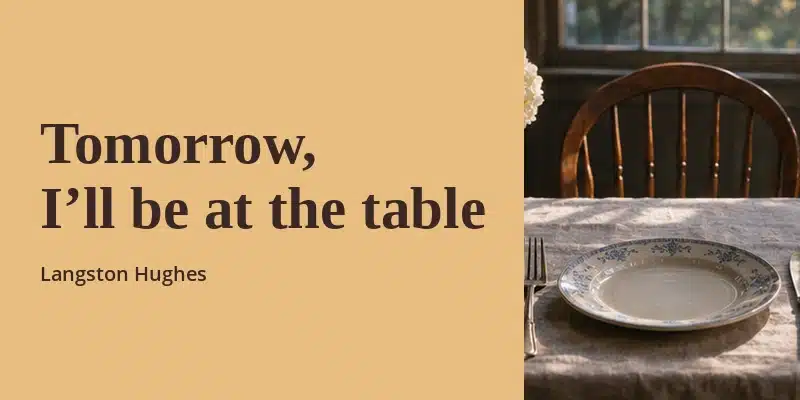
“Tomorrow,
I’ll be at the table”
— Langston Hughes, “I, Too.”
The Black speaker has been sent to the kitchen, and his declaration exposes the injustice of that exclusion. Notice how little of his imagined future he gives to the people who excluded him: his attention is already on his place at the table.
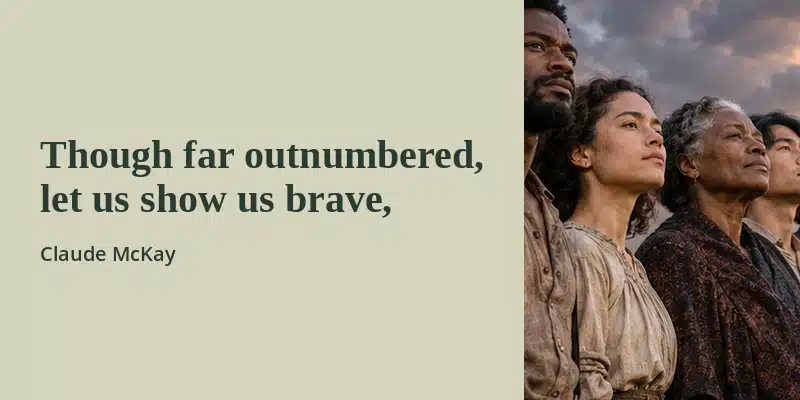
“Though far outnumbered, let us show us brave,”
— Claude McKay, “If We Must Die.”
McKay addresses people facing violent attack, and his courage takes the plural form us. Standing beside one other person can alter what both of you are able to bear.
“Neutrality helps the oppressor, never the victim.”
— Elie Wiesel, Nobel Peace Prize acceptance speech, 1986.
A bystander may experience silence as the safest available choice. The person being harmed experiences that same silence as a room full of people who will let it happen.
“Yet do I marvel at this curious thing:
To make a poet black, and bid him sing!”
— Countee Cullen, “Yet Do I Marvel.”
Cullen leaves a difficult question open, with his faith, his experience as a Black man, and his calling as a poet all pressing upon it. The poem itself is what he manages to make while the answer eludes him.
“This award is not just for me. It is for those forgotten children who want education.”
— Malala Yousafzai, Nobel Peace Prize lecture, 2014.
At the moment the world turns toward her, Malala directs its attention to the children still waiting. A hard-won victory can give you the chance to hold a door open for the people who should have come through with you.
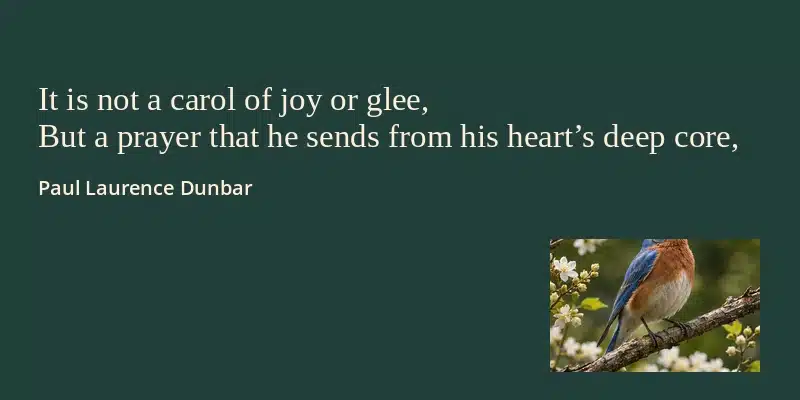
“It is not a carol of joy or glee,
But a prayer that he sends from his heart’s deep core,”
— Paul Laurence Dunbar, “Sympathy.”
A listener can admire the sound and completely misunderstand the bird. When someone makes beautiful work out of suffering, the work can deserve applause while the conditions still demand change.
“Her vigor flows like tides into my blood,
Giving me strength erect against her hate.”
— Claude McKay, “America.”
McKay feels a country’s vitality and speaks plainly about its racism in the same breath. Loving a place can give you an exacting sense of what it owes the people who live there.
“The best way of avenging yourself is not to become like the one who wronged you.”
— Marcus Aurelius, Meditations, Book VI, section 6, English rendering from the cited edition.
An injury can begin deciding your conduct long after the person responsible has gone. Choosing how you will act gives that person one fewer decision to make about your life.
When You Have to Begin Again
Starting over can mean making a plan with fewer resources than you had the first time. It can also mean discovering that you still have a useful skill, an ally, or one hour in which to begin.
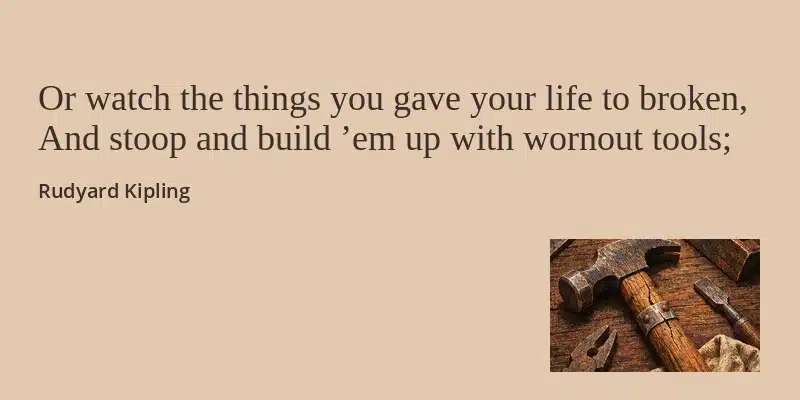
“Or watch the things you gave your life to broken,
And stoop and build ’em up with wornout tools;”
— Rudyard Kipling, “If—,” excerpt.
The tools are worn because the speaker has already spent years building once. Beginning again with less energy can ask more courage than the first attempt ever did.
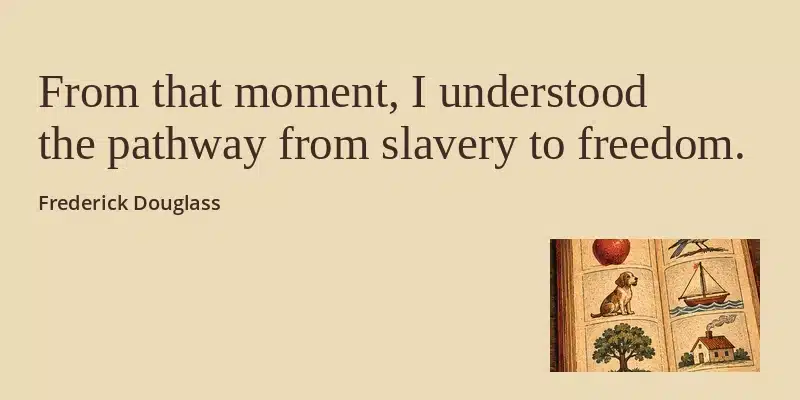
“From that moment, I understood the pathway from slavery to freedom.”
— Frederick Douglass, Narrative of the Life of Frederick Douglass, an American Slave.
An enslaver’s insistence that he must be kept from reading revealed to Douglass the power of literacy. The man who tried to close the path inadvertently showed him where it began.
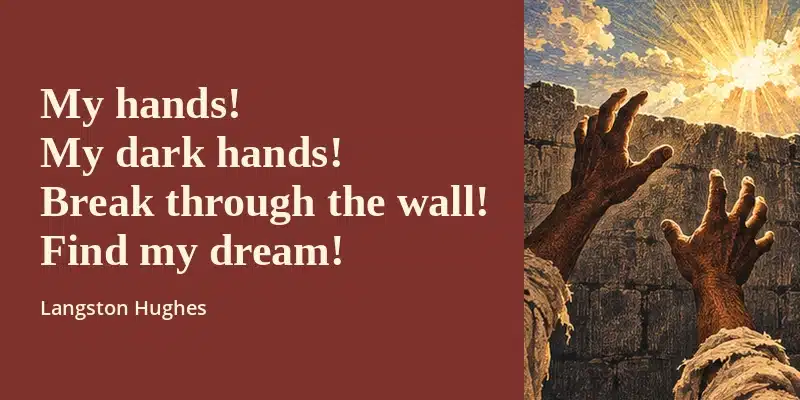
“My hands!
My dark hands!
Break through the wall!
Find my dream!”
— Langston Hughes, “As I Grew Older.”
A wall has come between the speaker and the dream he remembers from childhood. When he calls on his own dark hands, Hughes gives the power to act to the very person the wall was built to exclude.
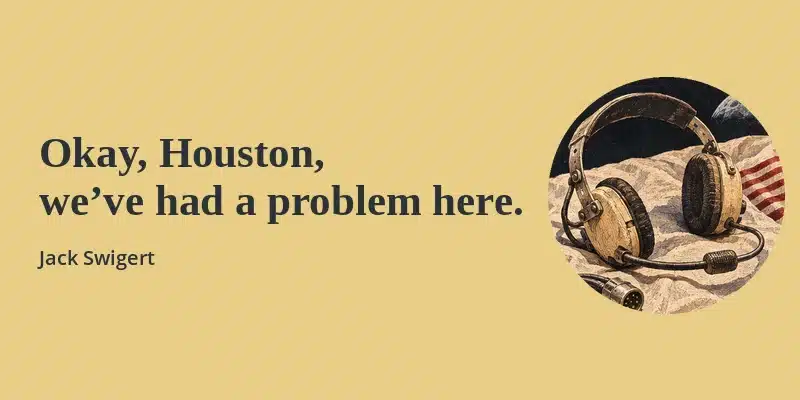
“Okay, Houston, we’ve had a problem here.”
— Jack Swigert, Apollo 13 transmission to Mission Control, 1970, as recorded by NASA.
Swigert told someone what he knew before he knew how to fix it. There is a kind of courage in making that first call while the only sentence you have is “Something has gone wrong.”
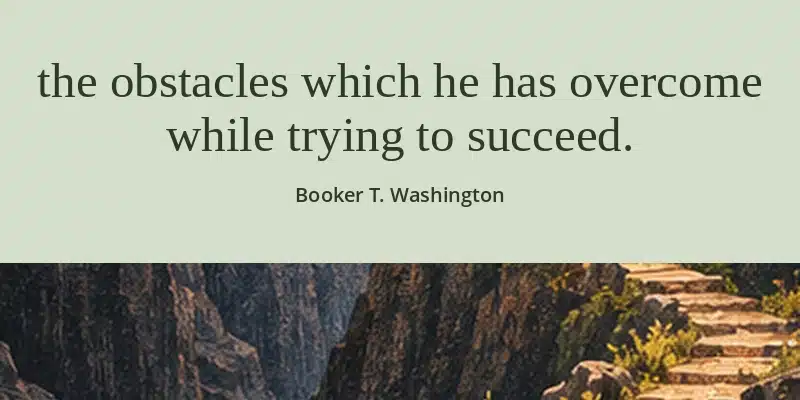
“the obstacles which he has overcome while trying to succeed.”
— Booker T. Washington, Up from Slavery, excerpt from his discussion of measuring success.
Two people can reach the same place after traveling very different distances. When you judge what you accomplished this year, include the ground you had to recover before anyone could see you moving forward.
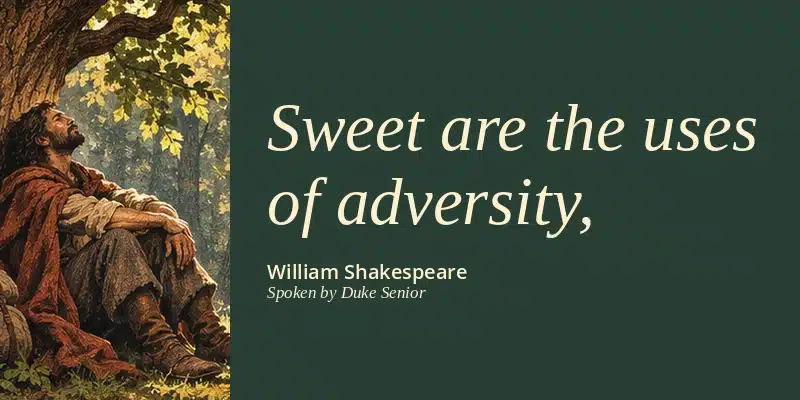
“Sweet are the uses of adversity,”
— William Shakespeare, As You Like It, Act II, scene 1, spoken by Duke Senior.
The duke speaks about his own exile, which gives him the right to say what he has found in it. You get to decide whether an experience taught you anything, and you get to take your time deciding.
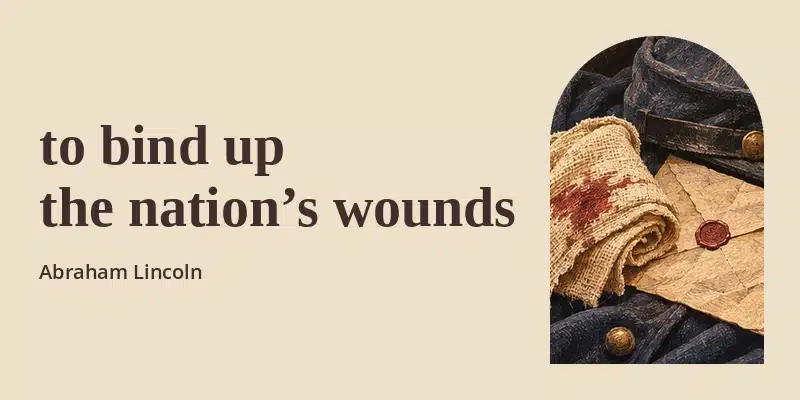
“to bind up the nation’s wounds”
— Abraham Lincoln, Second Inaugural Address, 1865, excerpt.
Lincoln chose the language of tending an injury for the work that would follow the Civil War. Ending a conflict settles one question; what to do for the people it hurt can occupy the rest of a life.
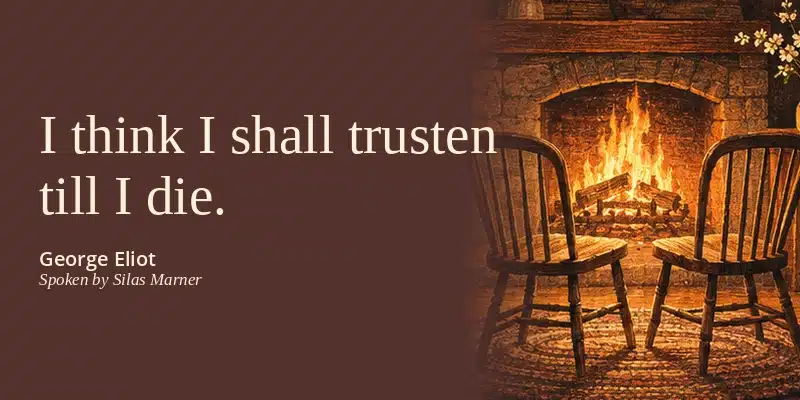
“I think I shall trusten till I die.”
— George Eliot, Silas Marner, spoken by Silas.
Silas reaches this sentence after betrayal, years of isolation, and the slow experience of being loved. What makes it moving is the modest opening, I think: trust is returning in his own voice, at his own pace.
When Hope Begins to Feel Possible Again
Hope can feel awkward at first. You’ve spent so long bracing for the worst that making a plan for next month seems almost reckless. These writers describe the moment a future begins to enter the room again.
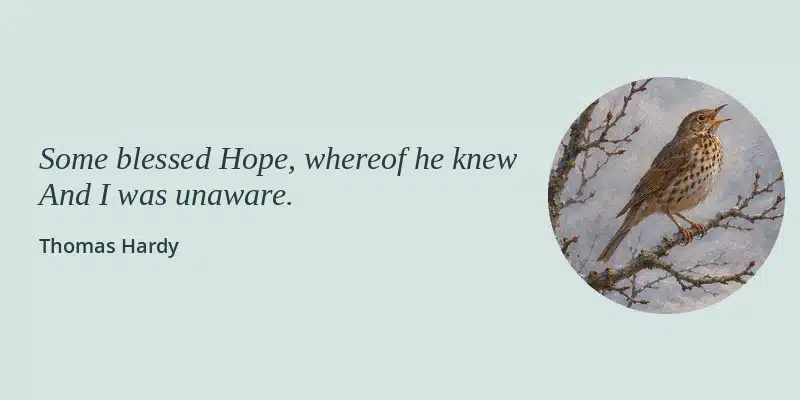
“Some blessed Hope, whereof he knew
And I was unaware.”
— Thomas Hardy, “The Darkling Thrush.”
Hardy cannot explain why an old bird sings so wholeheartedly in a bleak landscape. The opening for hope is his willingness to consider that his own reading of the world might be incomplete.
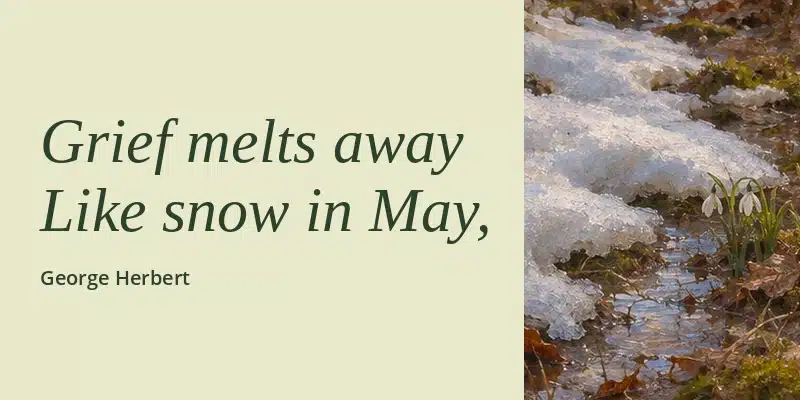
“Grief melts away
Like snow in May,”
— George Herbert, “The Flower.”
In Herbert’s devotional poem, the return of joy takes him by surprise even though the seasons have done this before. You may notice a thaw only afterward, when you realize you spent a whole afternoon absorbed in something you loved.
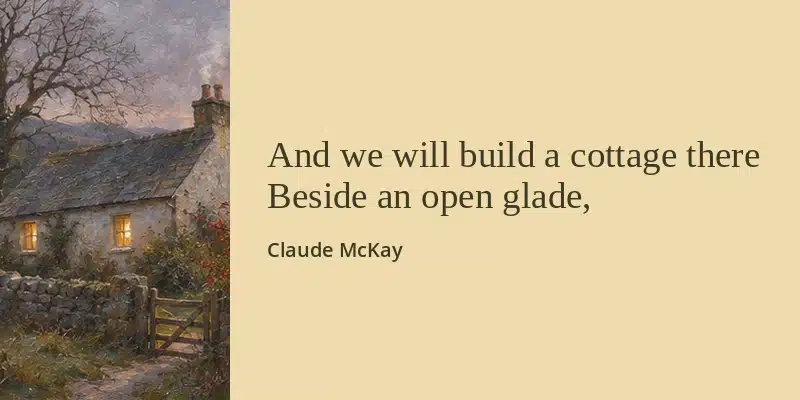
“And we will build a cottage there
Beside an open glade,”
— Claude McKay, “After the Winter.”
A whole future is hard to picture from the middle of a difficult winter. McKay begins with a house, a clearing, and the person contained in that small word we.
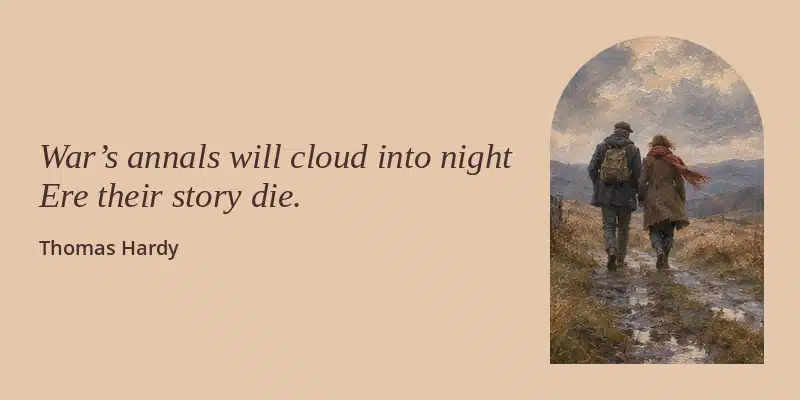
“War’s annals will cloud into night
Ere their story die.”
— Thomas Hardy, “In Time of ‘The Breaking of Nations’.”
Hardy lets a whispering couple walk through a poem about the collapse of nations. The history you see on the front page and the life you sustain at the kitchen table run on different clocks.
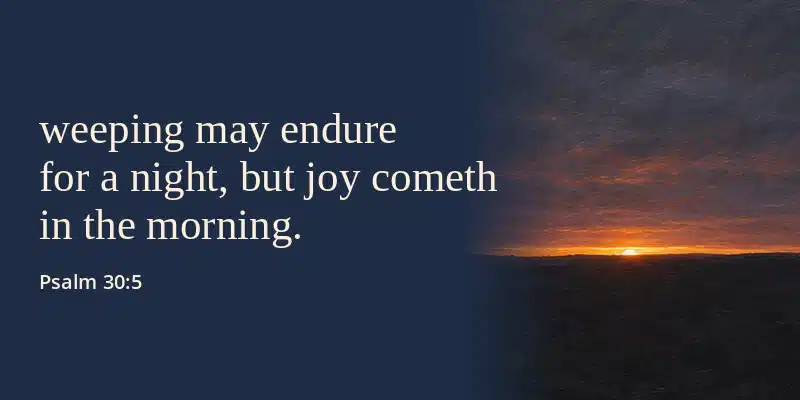
“weeping may endure for a night, but joy cometh in the morning.”
— Psalm 30:5, King James Version, excerpt.
The psalm gives weeping a place inside a song of thanksgiving. Read morning as an image of possibility, especially when your own sorrow has already lasted through many dawns.
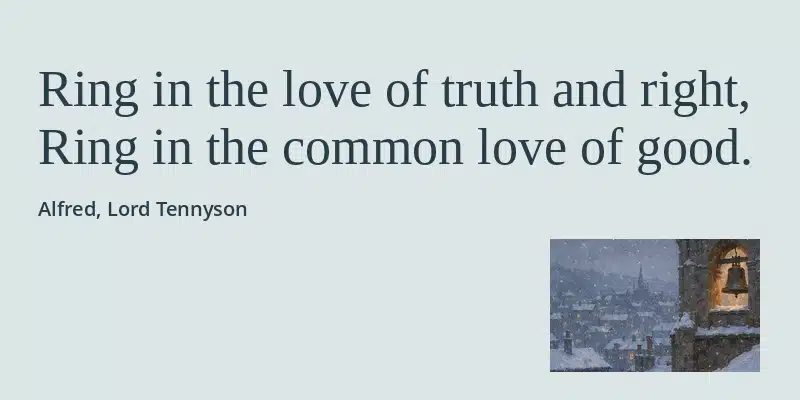
“Ring in the love of truth and right,
Ring in the common love of good.”
— Alfred, Lord Tennyson, In Memoriam A. H. H., section 106.
A poem rooted in personal mourning finds room to wish something better for strangers. There may come a day when you discover your heart has room for another person’s future alongside your own loss.
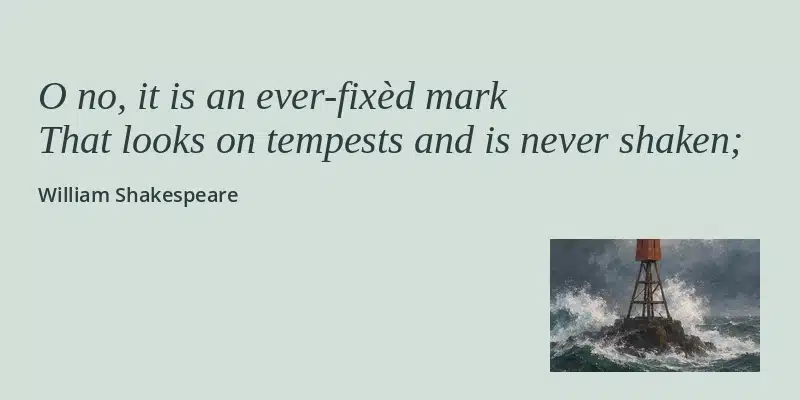
“O no, it is an ever-fixèd mark
That looks on tempests and is never shaken;”
— William Shakespeare, Sonnet 116.
A navigation mark earns its value precisely when the sea makes direction hard to judge. In ordinary life, that kind of steadiness can sound like someone saying, for the tenth difficult week, “I’ll be there on Thursday.”
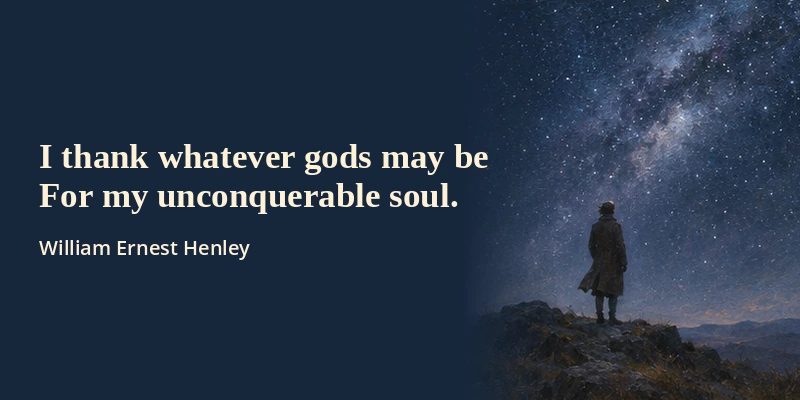
“I thank whatever gods may be
For my unconquerable soul.”
— William Ernest Henley, “Invictus.”
The surprise in this declaration of independence is that it begins with thanks. Years from now, you may remember the version of yourself who got up, answered the phone, and kept going through this week, and feel that same gratitude toward them.
A Line to Keep
Choose the quotation you would have wanted someone to place in your hand on your hardest day. Write it down with the author’s name. Underneath, add one sentence only you could write: where you were when you needed it, whose face came to mind, or what you managed to do that afternoon. Years from now, that last sentence may be the one you’re glad you kept.
If mornings are when the weight settles in, you may also find a line for the first hours of the day in our collection of motivational quotes to start the day.
Frequently Asked Questions
What is a short quote for hard times that feels honest?
Oscar Wilde’s line about sorrow being holy ground is a gentle choice for grief. It gives dignity to an experience you may have struggled to explain. For uncertainty, the opening of Epictetus’s Encheiridion gives you a practical question to carry into the day: which part of this is still mine to choose?
Which quote helps when I have to start over?
Kipling’s image of rebuilding with worn tools speaks directly to the exhaustion of a second attempt. It acknowledges something many encouragements leave out: the first effort cost you something, and beginning again takes place with the energy and resources you have now.
What can I read when I’m struggling to feel hopeful?
Try the ending of Thomas Hardy’s “The Darkling Thrush.” A man hears a bird singing and wonders whether the bird has perceived something he missed. You can live with that question on a day when a confident promise would ring hollow.
How can I use a quote during a difficult week?
Pick the word in it that catches your attention. Then finish the sentence, “In my life right now, that word means ___.” A reader might take Dickinson’s almost and write, “I cooked dinner for myself again, even though I left the dishes until morning.” That small detail makes the reflection your own.





- Be Respectful
- Stay Relevant
- Stay Positive
- True Feedback
- Encourage Discussion
- Avoid Spamming
- No Fake News
- Don't Copy-Paste
- No Personal Attacks
- Be Respectful
- Stay Relevant
- Stay Positive
- True Feedback
- Encourage Discussion
- Avoid Spamming
- No Fake News
- Don't Copy-Paste
- No Personal Attacks
